
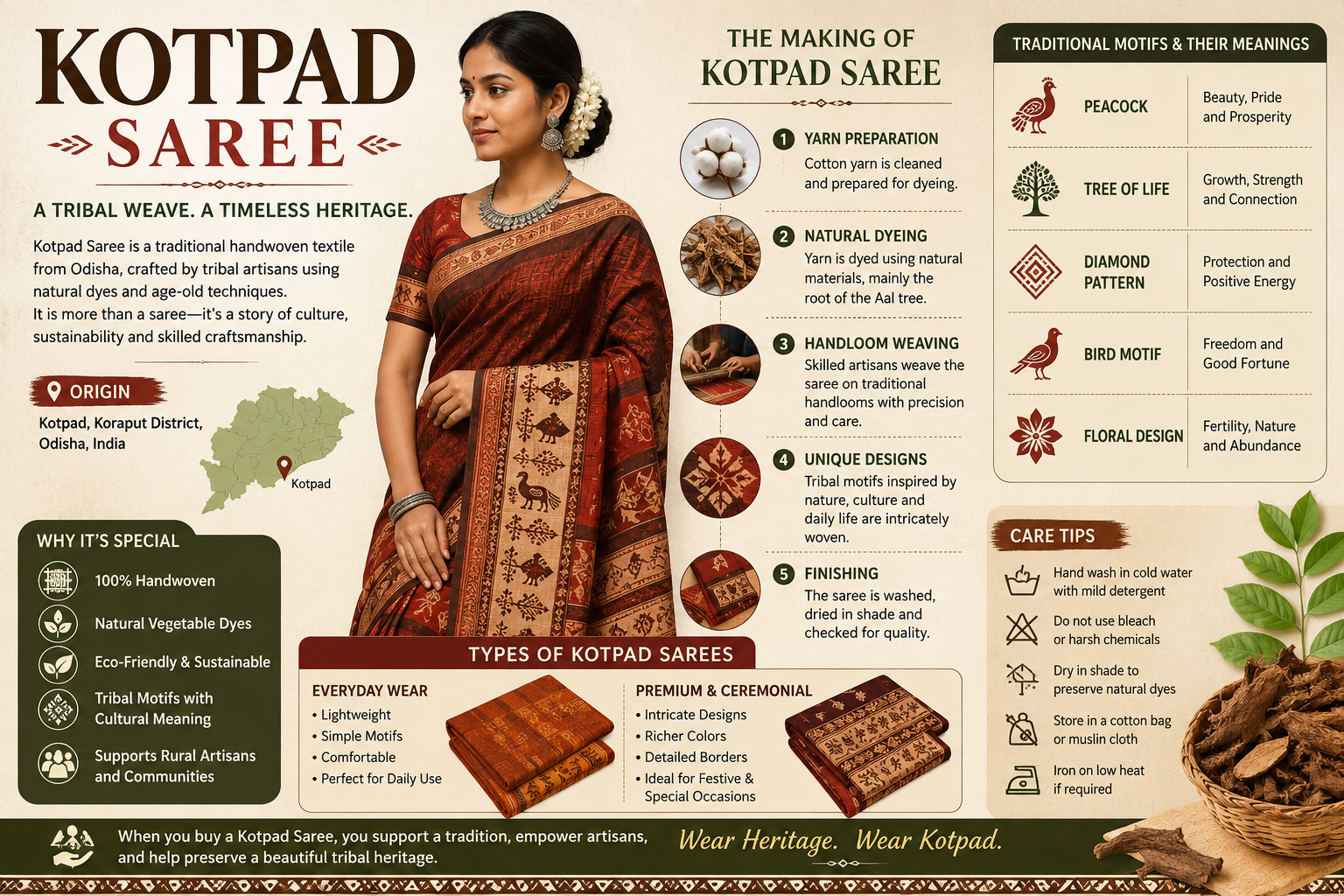
The Kotpad Saree is one of India’s most distinctive handloom textiles, originating from the tribal region of Kotpad in Odisha. Known for its earthy colors, natural dyeing process, and intricate tribal motifs, this saree represents centuries of craftsmanship and cultural heritage.
Unlike mass-produced textiles, every Kotpad Saree is woven by skilled artisans who dedicate days or even weeks to creating a single masterpiece. The use of natural vegetable dyes and traditional weaving techniques makes these sarees highly valued among textile enthusiasts, fashion designers, and collectors worldwide.
Today, the Kotpad Saree stands as a symbol of sustainable fashion, preserving both tribal traditions and environmentally friendly textile production methods.
Historical Origins of Kotpad Saree
The history of the Kotpad Saree dates back several centuries. It is deeply connected with the indigenous tribal communities of Odisha, particularly in the Koraput region.
Traditional weaving families developed this art form using locally available resources, creating textiles that reflected their environment, beliefs, and daily lives. Over generations, these weaving techniques were carefully preserved and passed from parents to children.
The saree evolved not merely as clothing but as an important cultural artifact that documented tribal identity and heritage.
The Tribal Communities Behind the Craft
The weaving tradition is primarily associated with the Mirgan community, known for their exceptional handloom skills. Their expertise in natural dyeing and weaving remains unmatched and continues to define the uniqueness of the Kotpad Saree.
Evolution Through Generations
Despite modernization, the essential weaving and dyeing methods have remained largely unchanged. This continuity has helped maintain the authenticity and cultural significance of the craft.
Geographical Significance of Kotpad
Kotpad is a small town located in the Koraput district of Odisha. The region’s natural resources play a critical role in the production of these sarees.
Why Kotpad in Odisha is Unique
Several factors contribute to the uniqueness of Kotpad Sarees:
- Availability of natural dye-producing plants
- Strong tribal cultural traditions
- Skilled artisan communities
- Favorable climatic conditions for dyeing and weaving
- Rich handloom heritage
The environment itself has shaped the visual language and production techniques of the saree.
Traditional Weaving Techniques
One of the most remarkable aspects of the Kotpad Saree is its weaving process.
The entire production is labor-intensive and requires extraordinary precision. Weavers use traditional handlooms, often operating them manually for several hours each day.
Handloom Methods Passed Down Through Families
Key stages include:
- Cotton yarn preparation
- Natural dye treatment
- Drying and conditioning
- Warp setting
- Hand weaving
- Finishing and inspection
Every stage demands skill, patience, and experience.
The resulting fabric is durable, breathable, and aesthetically rich, making it suitable for both everyday wear and special occasions.
Natural Dyeing Process
Natural dyeing is perhaps the most celebrated feature of the Kotpad Saree.
Unlike synthetic dyes used in commercial textile production, Kotpad artisans rely on organic materials obtained from local forests.
The Role of Aal Tree Root Dye
The roots of the Aal tree provide the distinctive reddish-brown shades associated with authentic Kotpad Sarees.
The dye extraction process involves:
| Step | Process |
|---|---|
| Collection | Harvesting Aal roots |
| Preparation | Cleaning and crushing roots |
| Boiling | Extracting color pigments |
| Dyeing | Soaking yarn in dye baths |
| Drying | Sun-drying naturally |
Eco-Friendly Textile Production
Benefits of natural dyes include:
- Reduced environmental impact
- Biodegradability
- Non-toxic production
- Sustainable resource use
- Unique color variations
These qualities align perfectly with modern sustainable fashion movements.
Distinctive Design Elements
Kotpad Sarees are immediately recognizable due to their unique visual characteristics.
Traditional Tribal Motifs
Common motifs include:
- Animals
- Birds
- Trees
- Geometric forms
- Nature-inspired patterns
These designs often represent tribal stories, folklore, and spiritual beliefs.
Symbolic Patterns and Meanings
Many motifs carry deeper meanings:
| Motif | Symbolism |
|---|---|
| Peacock | Beauty and prosperity |
| Tree | Growth and life |
| Diamond Pattern | Protection |
| Floral Design | Fertility and abundance |
Such symbolism transforms each saree into a wearable piece of cultural storytelling.
Types of Kotpad Sarees
The market offers several variations of Kotpad Sarees.
Everyday Wear Varieties
These sarees typically feature:
- Lightweight fabrics
- Simpler motifs
- Comfortable drapes
- Affordable pricing
Premium and Ceremonial Collections
Luxury versions may include:
- Complex weaving
- Detailed borders
- Richer dye treatments
- Exclusive patterns
These are often worn during weddings, festivals, and ceremonial events.
Cultural Importance in Tribal Society
The Kotpad Saree serves as more than a garment.
It is an expression of identity, heritage, and community pride.
Festivals and Rituals
Traditional occasions where Kotpad Sarees are commonly worn include:
- Marriage ceremonies
- Harvest festivals
- Religious rituals
- Tribal gatherings
- Community celebrations
The saree often symbolizes respect for ancestral traditions.
Economic Impact on Local Artisans
Handloom weaving remains an important source of livelihood in Kotpad.
Supporting Rural Livelihoods
The industry provides employment opportunities through:
- Yarn preparation
- Dye extraction
- Weaving
- Marketing
- Cooperative activities
By purchasing authentic Kotpad Sarees, consumers directly support artisan families and rural economies.
GI Tag and Recognition
The Kotpad Saree has received a Geographical Indication (GI) tag, recognizing its unique regional identity and traditional production methods.
Protection of Traditional Knowledge
The GI status helps:
- Prevent imitation products
- Preserve authenticity
- Promote artisan welfare
- Strengthen market recognition
- Encourage cultural preservation
This recognition has significantly enhanced the saree’s national and international reputation.
How to Identify an Authentic Kotpad Saree
With growing popularity, buyers should know how to recognize genuine products.
Key Features to Look For
Check for:
✔ Natural earthy colors
✔ Handwoven texture
✔ Traditional tribal motifs
✔ Slight variations indicating handmade craftsmanship
✔ Authentic artisan or cooperative certification
Authentic pieces often exhibit subtle imperfections that reflect genuine handloom production.
Styling a Kotpad Saree in Modern Fashion
Fashion designers increasingly incorporate Kotpad textiles into contemporary wardrobes.
Contemporary Fashion Trends
Popular styling ideas include:
- Pairing with minimalist jewelry
- Wearing with handcrafted silver accessories
- Using modern blouse designs
- Styling for office wear
- Fusion fashion combinations
The versatility of the Kotpad Saree allows it to seamlessly blend tradition with modern aesthetics.
Care and Maintenance Tips
Proper care helps preserve the beauty of natural dyes.
Preserving Natural Dyes
Recommended practices:
- Hand wash gently
- Use mild detergents
- Avoid harsh chemicals
- Dry in shade
- Store in breathable fabric covers
Following these steps can significantly extend the saree’s lifespan.
Challenges Faced by Kotpad Weavers
Despite growing recognition, artisans face several obstacles.
Competition from Machine-Made Textiles
Major challenges include:
- Cheap synthetic alternatives
- Declining youth participation
- Rising raw material costs
- Limited market access
- Inconsistent income opportunities
Addressing these issues is essential for safeguarding the future of this traditional craft.
Future Prospects of Kotpad Saree
The future of the Kotpad Saree appears promising due to increasing interest in:
- Sustainable fashion
- Ethical consumerism
- Handmade products
- Cultural tourism
- Heritage textiles
Government initiatives, artisan cooperatives, and digital marketplaces are helping bring global attention to this remarkable handloom tradition.
As awareness grows, Kotpad Sarees may become an even stronger symbol of India’s rich textile heritage.
Frequently Asked Questions
1. What is a Kotpad Saree?
A Kotpad Saree is a traditional handwoven saree from Odisha, known for natural vegetable dyes and tribal motifs.
2. Why is the Kotpad Saree famous?
It is famous for its eco-friendly dyeing process, handcrafted production, and deep tribal cultural significance.
3. What dyes are used in Kotpad Sarees?
Artisans primarily use natural dyes extracted from the roots of the Aal tree and other organic materials.
4. Is Kotpad Saree environmentally friendly?
Yes. The use of natural dyes and traditional weaving methods makes it one of the most sustainable textile products in India.
5. Does Kotpad Saree have a GI tag?
Yes. The saree has received Geographical Indication status, protecting its authenticity and regional identity.
6. How can I identify an authentic Kotpad Saree?
Look for natural earthy colors, handwoven textures, traditional motifs, and certification from recognized artisan groups or cooperatives.
7. Can Kotpad Sarees be worn for modern occasions?
Absolutely. Their elegant appearance and unique craftsmanship make them suitable for both traditional and contemporary settings.
8. Why should I buy a Kotpad Saree?
Purchasing a Kotpad Saree supports artisan communities, preserves cultural heritage, and promotes sustainable fashion.
Conclusion
The Kotpad Saree is far more than a beautiful garment—it is a living expression of tribal culture, environmental sustainability, and masterful craftsmanship. From its natural dyeing process and symbolic motifs to its role in supporting rural livelihoods, every aspect of the saree reflects generations of knowledge and dedication.
As consumers increasingly seek ethical and sustainable fashion choices, the Kotpad Saree offers a meaningful alternative to mass-produced textiles. By choosing this extraordinary handloom creation, buyers not only acquire a unique work of art but also contribute to preserving one of India’s most treasured weaving traditions for future generations.