
Bhubaneswar, the capital city of the eastern Indian state of Odisha, is renowned for its rich historical heritage, magnificent temples, vibrant culture, and rapid urban development. Often called the “Temple City of India,” Bhubaneswar represents a harmonious blend of ancient traditions and modern aspirations. As the political and administrative heart of Odisha, the city plays a crucial role in shaping the state’s cultural, economic, and social landscape.
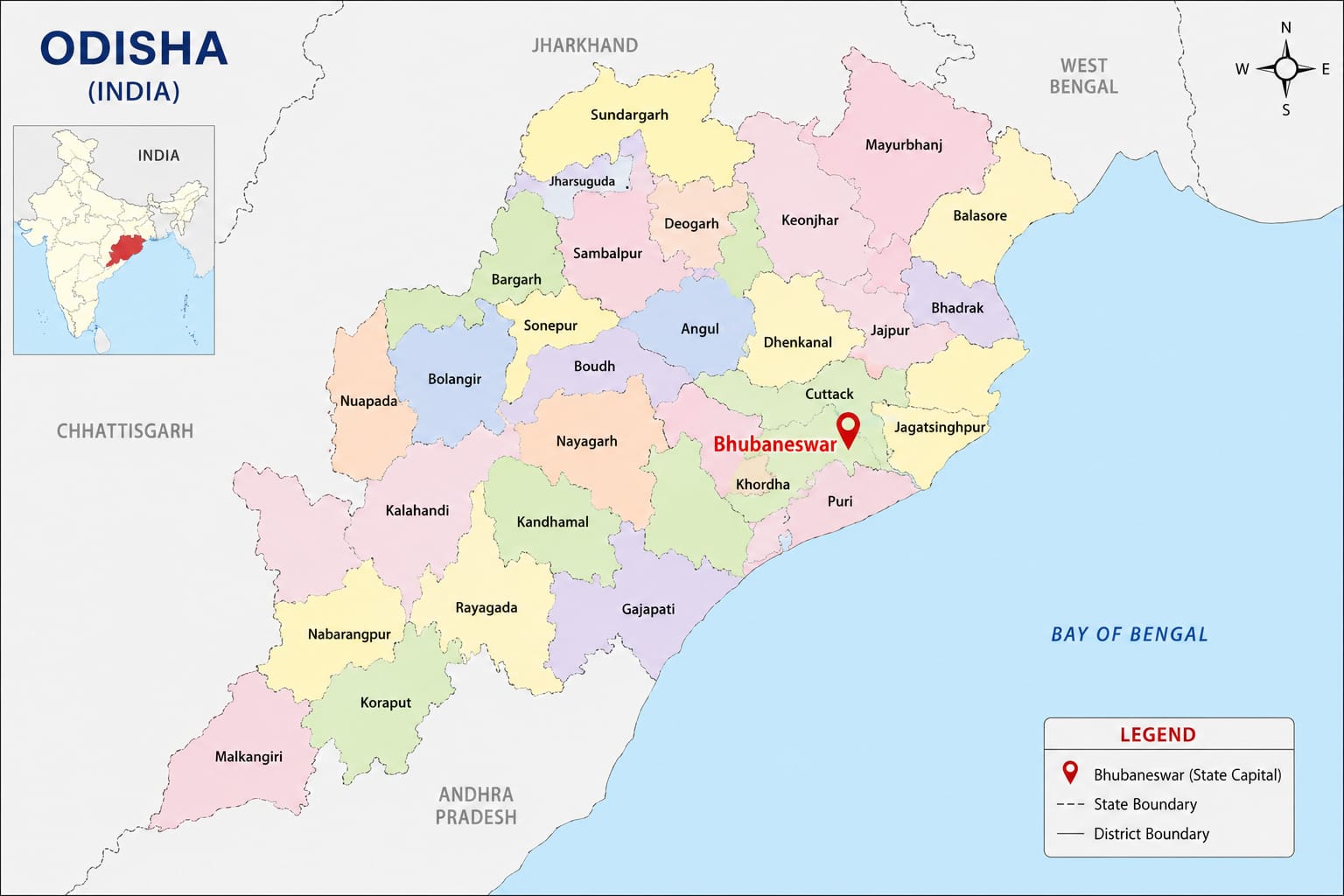
Historical Evolution and Significance of Bhubaneswar
Bhubaneswar has a history of over 2,000 years and was once part of the ancient kingdom of Kalinga, known for the historic Kalinga War (261 BCE) fought by Emperor Ashoka. After India’s independence, Odisha needed a planned capital city, and Bhubaneswar was chosen to replace Cuttack. The foundation stone of modern Bhubaneswar was laid on 13 April 1948 by Jawaharlal Nehru, and the city was designed by German architect Otto Königsberger, making it one of India’s earliest planned cities.
Today, Bhubaneswar is known as the “Temple City of India” and forms the famous Golden Triangle Tourism Circuit with Puri and Konark. As the capital of Odisha, it serves as the state’s administrative center and has emerged as a major hub for education, information technology, healthcare, sports, and urban development, making it one of the fastest-growing cities in eastern India.
Art and Culture
1. Odissi Dance
- Odissi is one of India’s oldest classical dance forms, with its roots in the temple traditions of ancient Odisha.
- The dance evolved from the performances of Maharis (temple dancers) and Gotipuas (young male dancers dressed as females) in temples such as the Lingaraj Temple and the Jagannath Temple.
- Odissi received official recognition as a Classical Dance of India in 1958 by the Sangeet Natak Akademi.
- Distinguished by graceful movements, intricate footwork, expressive gestures (mudras), and the characteristic Tribhangi posture, Odissi is now performed worldwide.
- Prominent exponents such as Kelucharan Mohapatra and Sanjukta Panigrahi played a vital role in its revival and global recognition.
2. Traditional Handicrafts
Bhubaneswar showcases Odisha’s rich craftsmanship through:
- Silver Filigree (Tarakasi): Delicate silver-wire jewelry and decorative items.
- Stone Carving: Intricate sculptures inspired by Kalinga temple architecture.
- Pattachitra Painting: Traditional cloth-based paintings depicting mythological and religious themes.
- Appliqué Work (Chandua): Colorful fabric art associated with temple rituals and decorations.
- Palm Leaf Engraving (Talapatra Chitra): Ancient manuscript and illustration art.
3. Classical and Folk Music
- Odissi music forms an essential part of Odisha’s cultural tradition.
- Folk musical traditions such as Dalkhai, Karma, and Chhau music are also widely appreciated.
- Various cultural festivals and institutions promote both classical and folk performances throughout the year.
4. Major Festivals Celebrated in Bhubaneswar
The city comes alive with numerous religious and cultural festivals:
- Durga Puja: Grand celebrations with elaborately decorated pandals and cultural programs.
- Rajo Festival: A unique Odia festival celebrating womanhood, fertility, and the arrival of the monsoon.
- Makar Sankranti: Marked by traditional rituals, fairs, and special delicacies.
- Kartik Purnima: Celebrated with the ritual of Boita Bandana, commemorating Odisha’s ancient maritime heritage.
- Rath Yatra: Associated with Lord Jagannath and celebrated with immense devotion across Odisha.
- Shivaratri: Particularly significant due to Bhubaneswar’s numerous Shiva temples.
- Ekamra Utsav: A cultural festival showcasing Odisha’s dance, music, crafts, and cuisine.
5. Museums and Cultural Institutions
Several institutions preserve and promote Odisha’s artistic legacy:
- Odisha State Museum
- Odisha Crafts Museum (Kala Bhoomi)
- Odisha Sangeet Natak Akademi
- Utkal University of Culture
6. Literary and Cultural Heritage
- Bhubaneswar has long been a center of Odia literature, poetry, and theatre.
- The city celebrates the works of renowned writers such as Sarala Das and Fakir Mohan Senapati through literary festivals, book fairs, and cultural events.
- Traditional storytelling, folk theatre, and devotional performances continue to enrich its cultural heritage.
Cuisine and Food Culture
The cuisine of Bhubaneswar reflects the rich culinary heritage of Odisha and is known for its simplicity, nutritional value, and distinctive flavors. Traditional Odia food emphasizes the use of rice, lentils, vegetables, and locally sourced ingredients, offering a balanced and wholesome diet.
Popular dishes include:
- Dalma – A nutritious preparation of lentils and vegetables.
- Pakhala Bhata – Fermented rice served with curd, vegetables, and accompaniments; regarded as Odisha’s signature dish.
- Chhena Poda – A famous baked cottage cheese dessert.
- Rasabali – A traditional milk-based sweet delicacy.
- Macha Besara – Fish curry cooked in mustard gravy.
- Khaja – A popular layered sweet associated with the Jagannath tradition.
A unique culinary celebration is Pakhala Divas observed annually on 20 March to promote Odisha’s traditional food culture and highlight the significance of Pakhala Bhata in Odia cuisine. The day is widely celebrated across the state and among the Odia diaspora worldwide.
The city’s street food markets, traditional eateries, and modern restaurants provide visitors with an authentic taste of Odisha’s diverse and flavorful gastronomy
Major Tourist Attractions and Tourism Significance
Bhubaneswar is one of India’s most important heritage destinations, renowned for its ancient temples, archaeological sites, and cultural landmarks. The city serves as the gateway to Odisha’s rich historical and religious heritage.
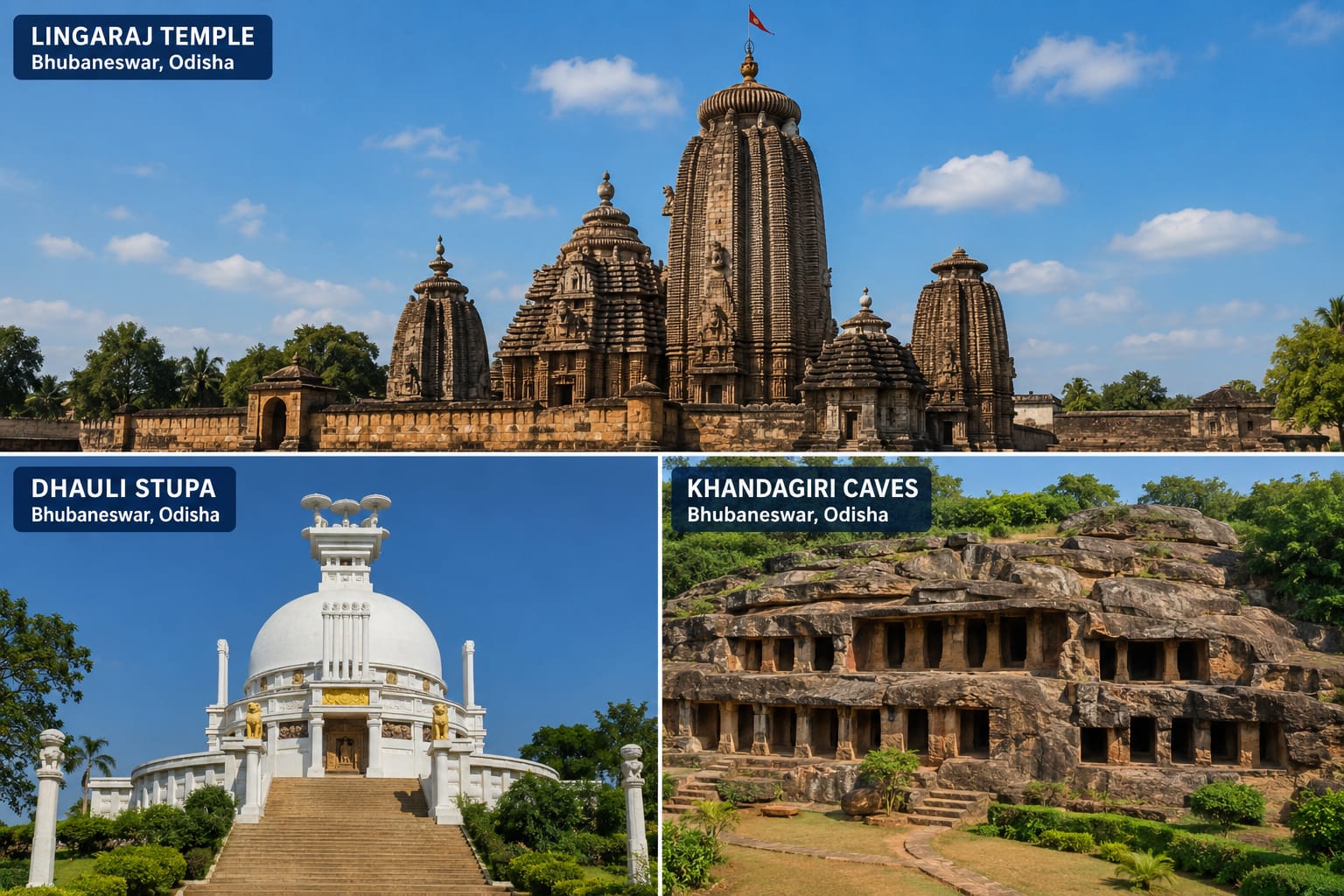
Major Tourist Attractions
- Lingaraj Temple – An 11th-century temple dedicated to Lord Shiva and one of the finest examples of Kalinga architecture.
- Mukteswar Temple – Known as the “Gem of Odisha Architecture” for its exquisite carvings and ornate torana (arched gateway).
- Rajarani Temple – Famous for its elegant sandstone construction and intricate sculptural artwork.
- Udayagiri and Khandagiri Caves – Ancient Jain rock-cut caves dating back to the 2nd century BCE, associated with King Kharavela.
- Dhauli Shanti Stupa – A symbol of peace built near the historic site of the Kalinga War.
Nandankanan Zoological Park – A renowned zoo and botanical park, famous for its white tigers and wildlife conservation programs. - Ananta Vasudeva Temple – A historic temple dedicated to Lord Krishna, noted for its unique Vaishnavite traditions.
- Odisha State Museum – Preserves Odisha’s archaeological, artistic, and cultural heritage.
- Kala Bhoomi (Odisha Crafts Museum) – Showcases the state’s traditional arts, crafts, and handicrafts.
- Ekamra Kanan Botanical Gardens – A popular eco-tourism and recreational destination.
Tourism Significance
- Bhubaneswar forms the famous Golden Triangle Tourism Circuit along with Puri and Konark, the most visited tourist route in Odisha.
- The city attracts pilgrims, history enthusiasts, archaeologists, and cultural tourists from across India and abroad.
- Tourism contributes significantly to Odisha’s economy by generating employment in hospitality, transportation, handicrafts, and local businesses.
- Odisha receives millions of domestic and international tourists annually, with Bhubaneswar serving as the state’s primary tourism gateway due to its excellent air, rail, and road connectivity.
- The development of heritage corridors, museums, eco-tourism projects, and cultural festivals has further strengthened Bhubaneswar’s position as a leading tourism destination in Eastern India.
Political Importance and Government Institutions
As the capital of Odisha, Bhubaneswar serves as the state’s political and administrative hub, playing a central role in governance, policymaking, and public administration.
Key Government Institutions
- Odisha Legislative Assembly – The state’s law-making body.
- Lok Seva Bhawan – The State Secretariat and administrative headquarters of the Government of Odisha.
- Raj Bhavan – Official residence of the Governor of Odisha.
- Odisha High Court Bench Offices and State Administrative Departments.
- Headquarters of various public sector undertakings (PSUs) and government agencies.
Economy of Bhubaneswar
Bhubaneswar has emerged as one of Eastern India’s fastest-growing economic centers, driven by rapid urbanization, technological advancement, and infrastructure development.
Key Sectors Driving Bhubaneswar’s Economy
- Information Technology (IT) and IT-enabled Services (ITES): Infocity, Tech Mahindra, Infosys, TCS, Wipro, and various IT parks.
- Education and Research: IIT Bhubaneswar, KIIT University, Utkal University, AIIMS Bhubaneswar, and research institutions.
- Tourism and Hospitality: Lingaraj Temple, Nandankanan Zoological Park, Dhauli Shanti Stupa, hotels, and tourism-related services.
- Real Estate and Infrastructure Development: Smart City projects, residential townships, commercial complexes, and metro-region development.
- Healthcare and Medical Services: AIIMS Bhubaneswar, SUM Hospital, Apollo Hospitals, and other healthcare facilities.
- Retail and Commerce: Esplanade One Mall, DN Regalia Mall, local markets, wholesale trade, and e-commerce businesses.
The presence of premier institutions such as IIT Bhubaneswar and KIIT University has strengthened the city’s knowledge-based economy. Supported by the Smart Cities Mission, improved infrastructure, and growing investments, Bhubaneswar continues to attract businesses and generate employment, making it a major economic hub in Eastern India.
Conclusion
Bhubaneswar is a remarkable blend of ancient heritage and modern development, reflecting Odisha’s rich cultural legacy and progressive vision. As the state’s political, educational, and economic center, it continues to grow as a leading Smart City while preserving its historical and cultural identity. “Jananī Janmabhūmiśca Svargādapi Garīyasī” (One’s mother and motherland are greater than heaven) aptly reflects the pride and deep connection that the people of Odisha share with their beloved capital, Bhubaneswar.