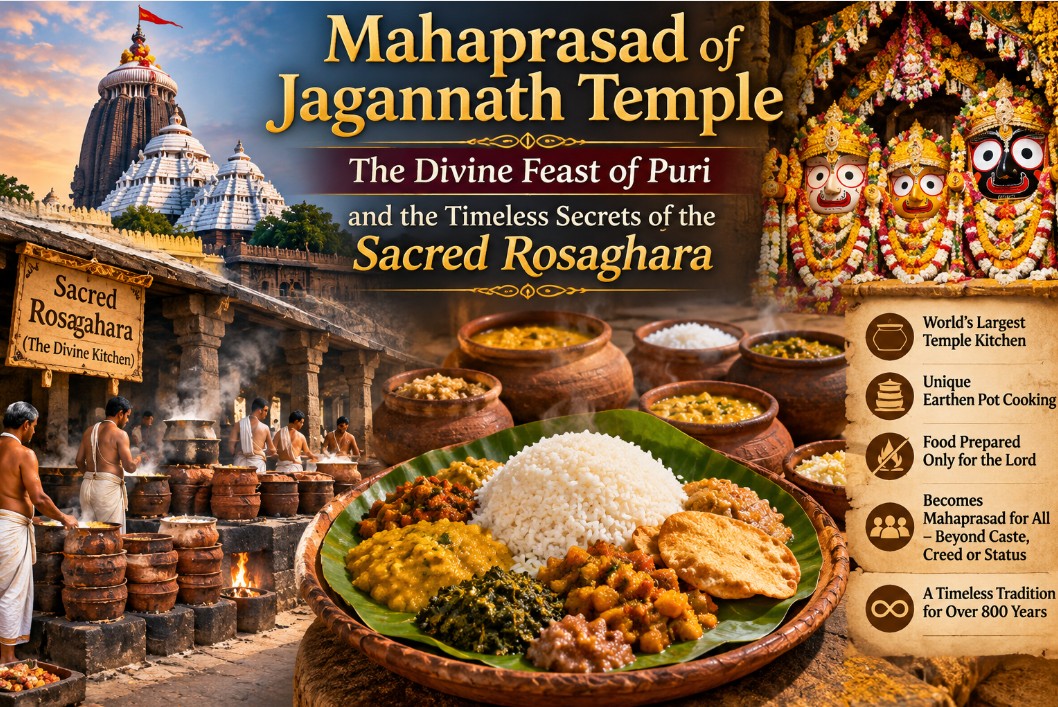
Beyond its magnificent architecture, ancient traditions and world-famous Rath Yatra, the Shree Jagannath Temple in Puri is equally revered for something that touches the lives of millions of devotees — its sacred Mahaprasad, popularly known as Abhada. More than just a religious offering, Mahaprasad represents devotion, equality, tradition and the unique culinary heritage of Odisha.
Prepared in the temple's legendary kitchen, known as the Rosaghara, this sacred food follows centuries-old rituals and practices passed down through generations. For devotees, receiving and sharing Mahaprasad is considered an act of divine blessing, making it one of the most cherished spiritual experiences associated with Lord Jagannath.
From Bhoga to Mahaprasad: A Sacred Journey
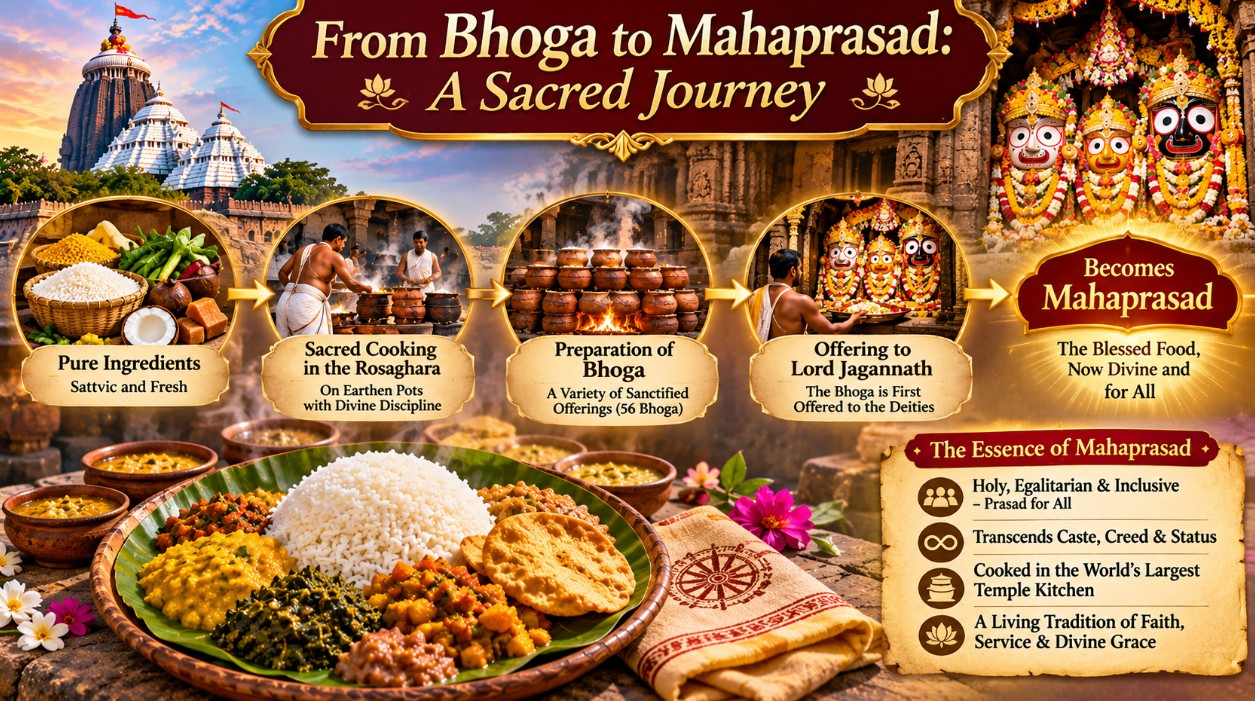
The food offered to Lord Jagannath, Lord Balabhadra and Devi Subhadra is known as Bhoga. However, it acquires the sacred status of Mahaprasad after being offered to the deities and subsequently re-offered to Goddess Bimala, the presiding Shakti deity within the temple complex.
Representational Image
This distinctive ritual gives Mahaprasad its special religious significance. Devotees believe it carries the divine blessings of the deities and is therefore much more than an ordinary meal.
The tradition is deeply rooted in the philosophy of Lord Jagannath, whose worship embraces humanity beyond social and economic divisions. At Ananda Bazaar, devotees from different communities and backgrounds come together to receive and share the same sacred food, reflecting the spirit of equality and universal brotherhood.
Chappan Bhoga: The Tradition of 56 Offerings
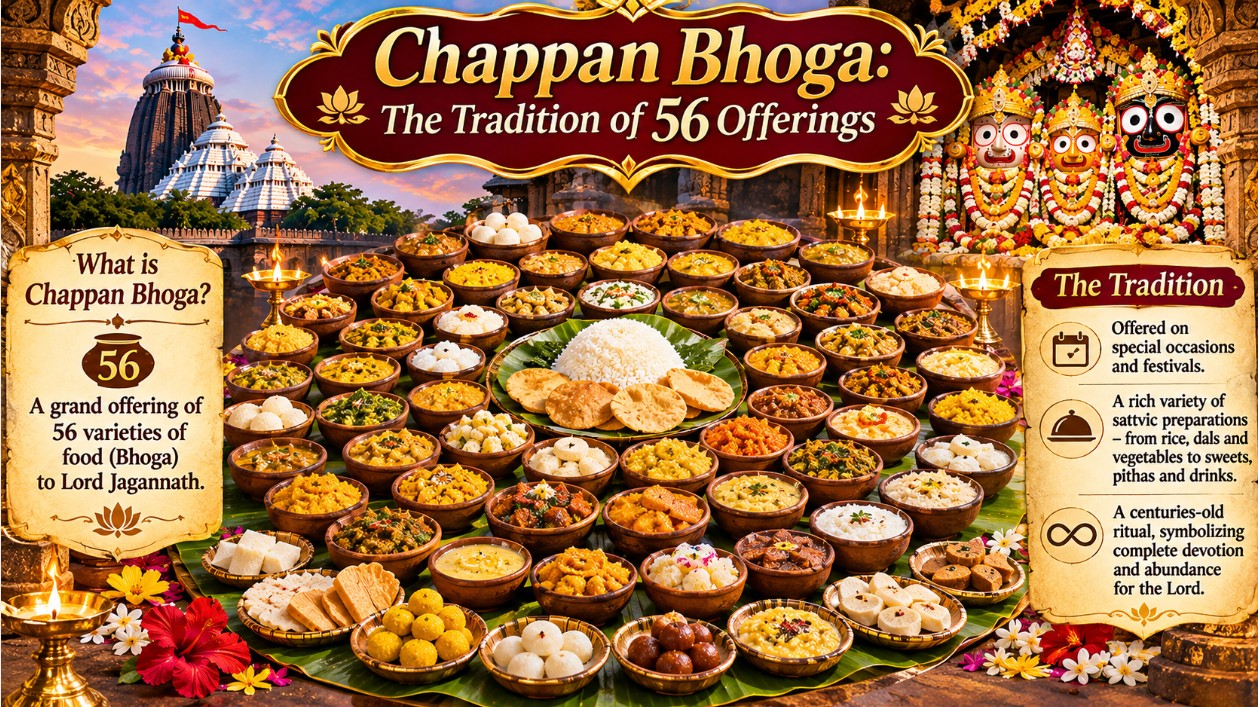
One of the most fascinating aspects of the Jagannath Temple's food tradition is Chappan Bhoga, or the offering of 56 varieties of food to the deities.
According to popular Hindu tradition, the concept is associated with Lord Krishna and the Govardhan episode. When Krishna lifted Govardhan Hill on his little finger to protect the people of Gokul from torrential rain sent by Indra, he remained without his regular meals for seven days. After the rains stopped, the grateful villagers prepared 56 different food items for him, representing eight daily meals over seven days.
Representational Image
This devotional tradition is associated with the elaborate food offerings made to Lord Jagannath. The offerings include rice preparations, lentils, vegetable dishes, sweets, cakes and several traditional delicacies, prepared according to established temple customs.
Rosaghara: The Legendary Kitchen of Lord Jagannath
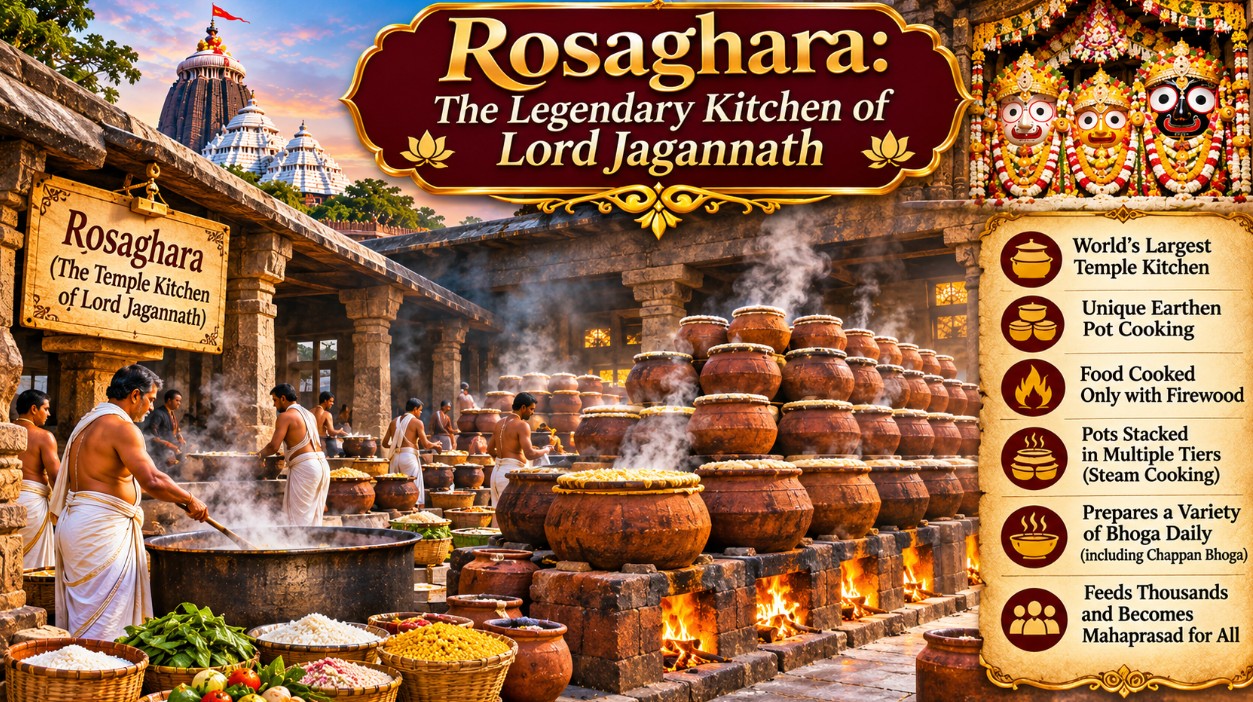
The heart of this extraordinary culinary tradition is the Rosaghara, the famous temple kitchen widely regarded as one of the largest traditional temple kitchens in the world.
Spread across a vast area, the kitchen is a remarkable example of an ancient food-preparation system that continues to function through inherited knowledge, ritual discipline and collective effort.
Representational Image
The kitchen is managed by hereditary temple cooks known as Suaras and Mahasuaras. Their responsibilities and culinary practices have been passed down through generations, largely through oral instruction rather than written recipes.
Cooking takes place on hundreds of traditional earthen hearths, known as chulhas, using firewood as fuel. Fresh earthen pots are used for preparing the food, while water is traditionally drawn from sacred temple wells known as Ganga and Jamuna.
The ingredients are predominantly traditional and locally sourced, including rice, lentils, seasonal vegetables, ghee, coconut, milk, curd and jaggery. In keeping with the temple's sattvic food traditions, onion and garlic are strictly avoided.
The Mystery of the Seven Stacked Earthen Pots
Perhaps the most intriguing feature of the Rosaghara is its distinctive cooking technique.
According to temple tradition, earthen pots are stacked vertically, one above another, over a wood-fired hearth. Remarkably, devotees and traditional accounts describe the food in the uppermost pot as cooking first, followed by the pots below.
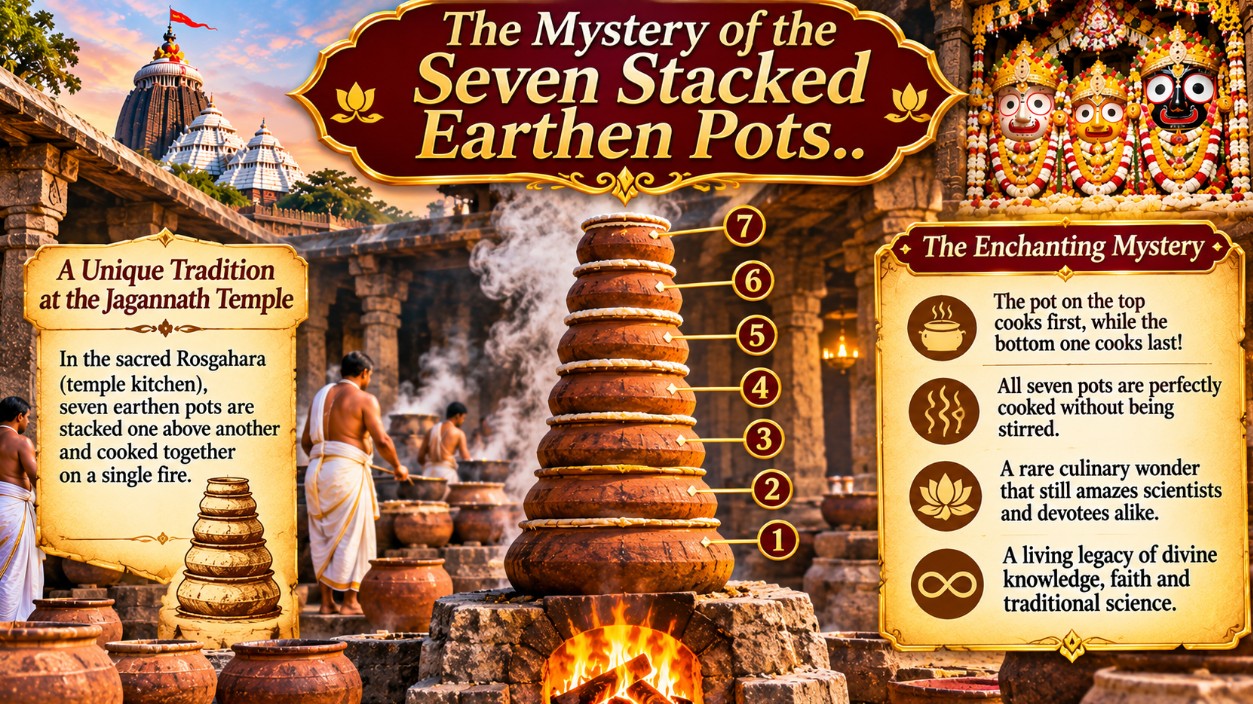
Representational Image
This unusual practice has become one of the most widely discussed features of the Jagannath Temple kitchen and adds to the fascination surrounding its centuries-old culinary traditions.
The kitchen also operates according to strict ritual timings linked to the daily worship schedule of the deities. Food preparation is not treated as an ordinary culinary activity but as an essential part of temple worship. Every stage, from ingredient selection to cooking and offering, is governed by established customs.
Three Sacred Categories of Mahaprasad
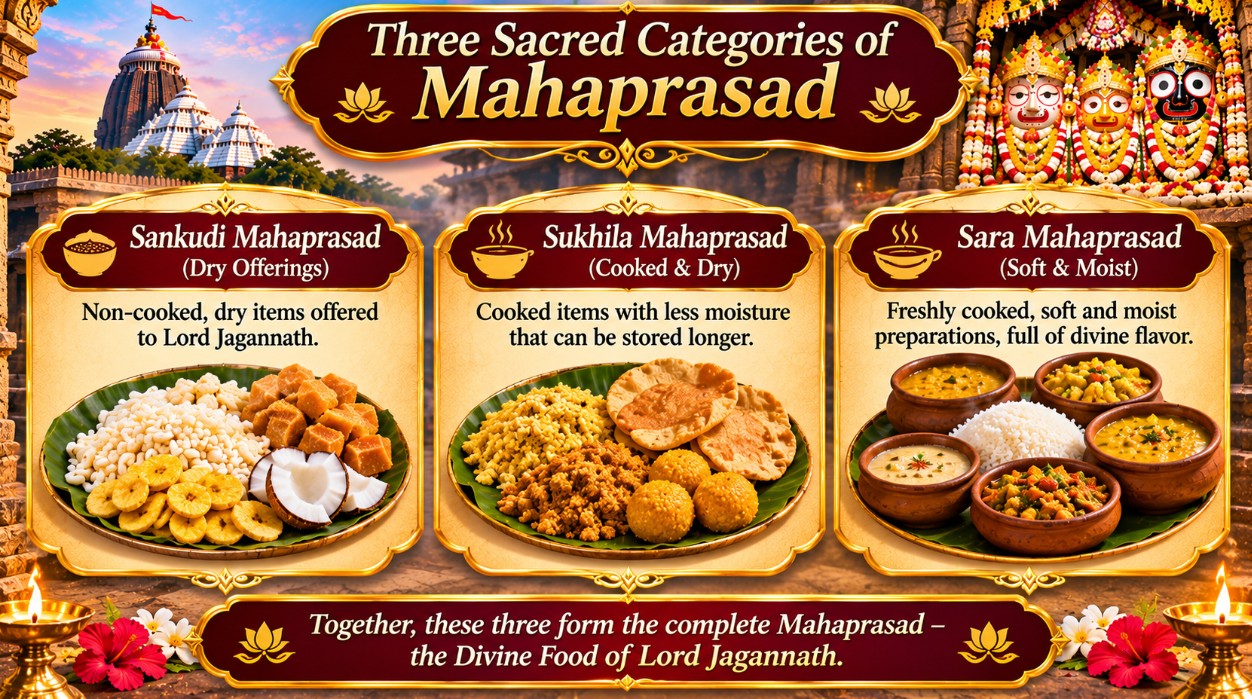
Representational Image
The offerings prepared in the temple are traditionally classified into three broad categories:
1. Sankhudi Bhoga
This category primarily consists of cooked food, including rice, dal and different vegetable preparations. The term Abhada is commonly used for the cooked rice-based Mahaprasad served to devotees.
2. Nisankhudi or Sukhila Bhoga
This category includes dry food preparations and traditional sweets such as Khaja, Gaja, Laddu, Malpua and other delicacies. These offerings form an important part of the temple's diverse culinary tradition.
3. Nirmalya
Nirmalya refers to sacred dried rice associated with the temple's rituals. It is highly revered by devotees and is traditionally preserved and carried as a symbol of divine blessings.
Together, these offerings reflect the remarkable variety of the Jagannath Temple's food culture.
Ananda Bazaar: Where Food Becomes a Symbol of Equality
After the prescribed rituals and offerings are completed, Mahaprasad reaches Ananda Bazaar, the celebrated food market within the Jagannath Temple complex.
Ananda Bazaar is one of the most distinctive features of the temple experience. Devotees gather here to purchase, receive and share Mahaprasad, creating an atmosphere that reflects the spiritual and cultural identity of Puri.
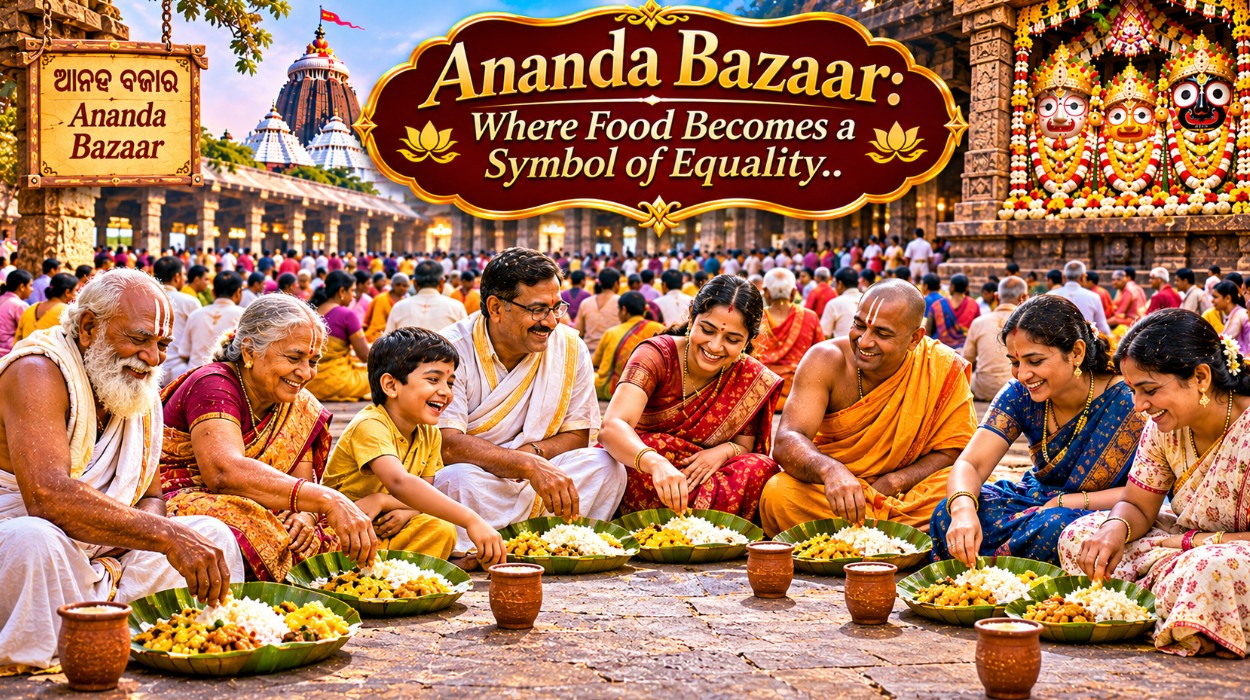
Representational Image
What makes this tradition particularly meaningful is its emphasis on equality. Mahaprasad is shared without discrimination based on caste or social background. People sit together, eat with their hands and traditionally use banana leaves or other customary serving arrangements.
For many devotees, sharing Mahaprasad is an expression of the belief that all human beings are equal before Lord Jagannath.
Food That Is Prepared as an Offering, Not Merely a Meal
The preparation of Mahaprasad is governed by religious discipline and a deep sense of sanctity. Unlike commercial kitchens, the Rosaghara follows a ritual-based system in which cooking itself is regarded as an act of devotion.
Traditional accounts associate the kitchen's food preparation with Goddess Lakshmi, who is revered as the divine provider and guardian of the household's nourishment. This belief adds another spiritual dimension to the culinary practices of the temple.
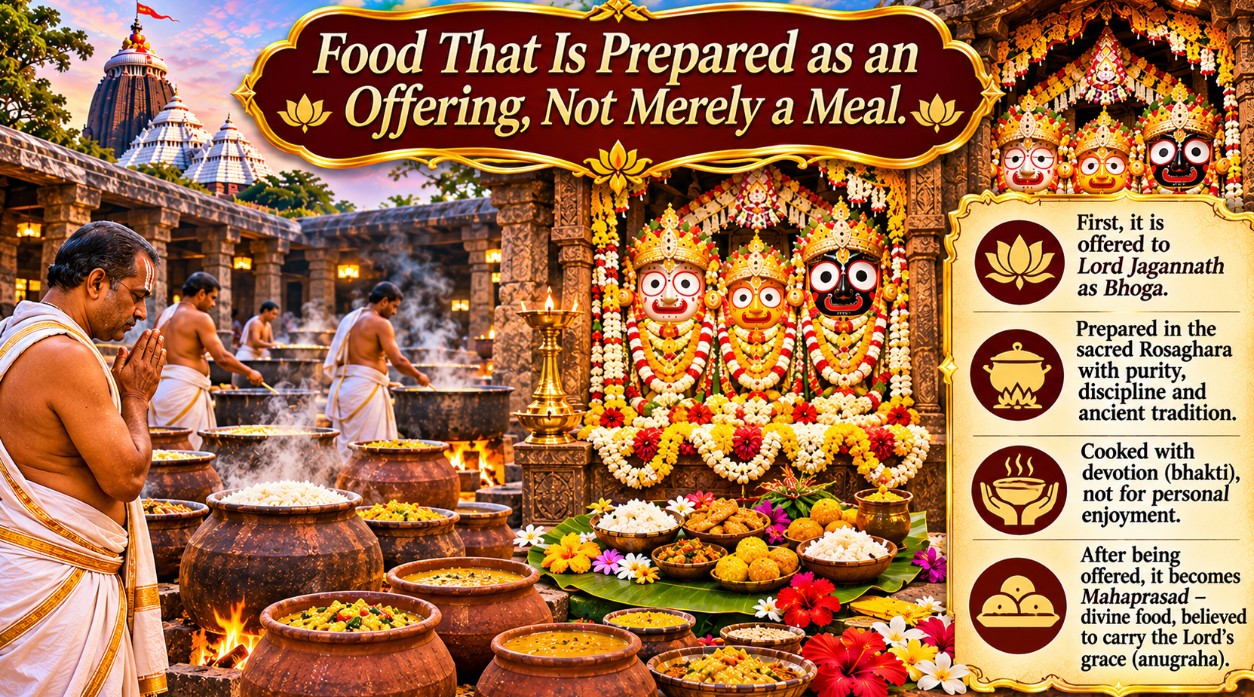
Representational Image
The quantities prepared vary according to the temple's ritual calendar, daily offerings and the number of devotees. During major festivals, particularly Rath Yatra, the scale and significance of the food offerings become even more prominent.
The traditional belief that food should not go to waste and that no devotee should remain hungry further reinforces the philosophy of generosity associated with Lord Jagannath.
A Living Heritage That Transcends Generations
The Mahaprasad tradition is not simply about cooking food in earthen pots or preserving ancient recipes. It represents a living cultural heritage in which faith, community, craftsmanship and culinary knowledge come together.
From the hereditary Suaras working in the Rosaghara to the devotees sharing food at Ananda Bazaar, every aspect of the tradition reflects a remarkable continuity between the past and the present.
In an age when food is increasingly associated with luxury, lifestyle and commercial value, Mahaprasad offers a different perspective. It reminds people that food can also be an expression of gratitude, compassion, equality and spiritual connection.
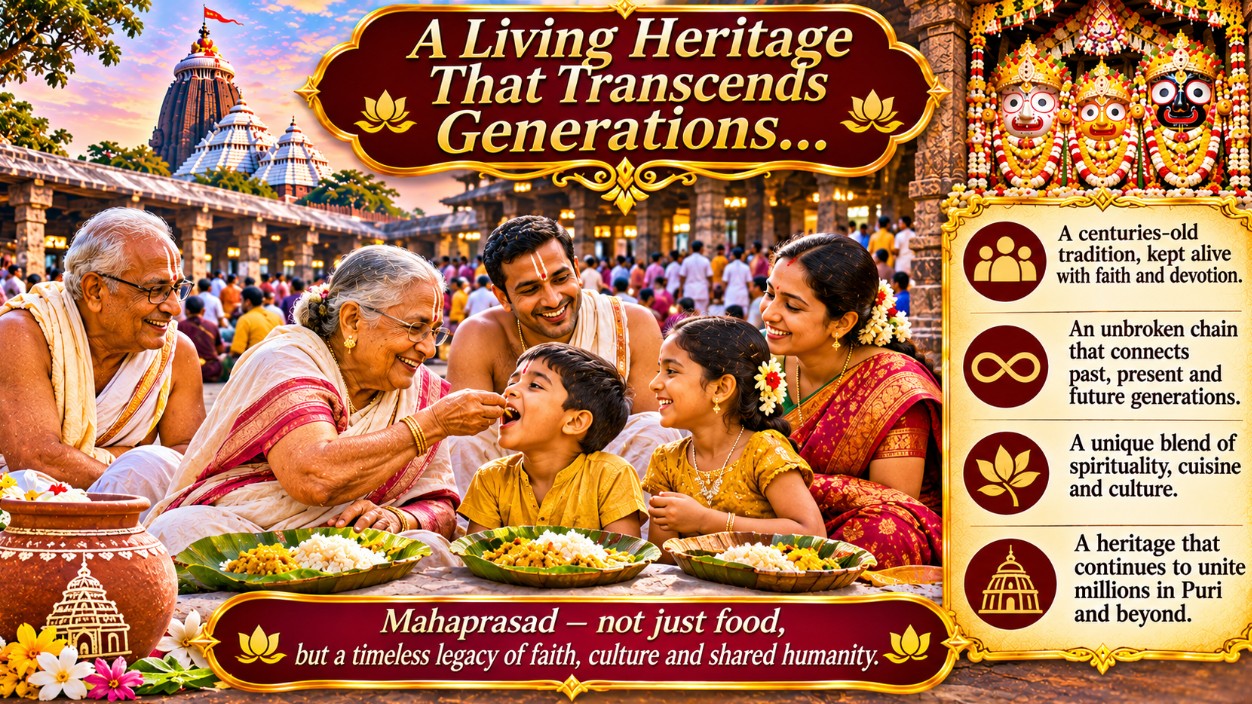
Representational Image
For the millions who visit Puri, a darshan of Lord Jagannath may be the central purpose of their pilgrimage, but sharing Mahaprasad often becomes an equally unforgettable experience.
Ultimately, Mahaprasad is not merely the sacred food of Lord Jagannath. It is a symbol of Odisha's spiritual identity, a celebration of its culinary heritage and a timeless message that devotion is best expressed through sharing.