
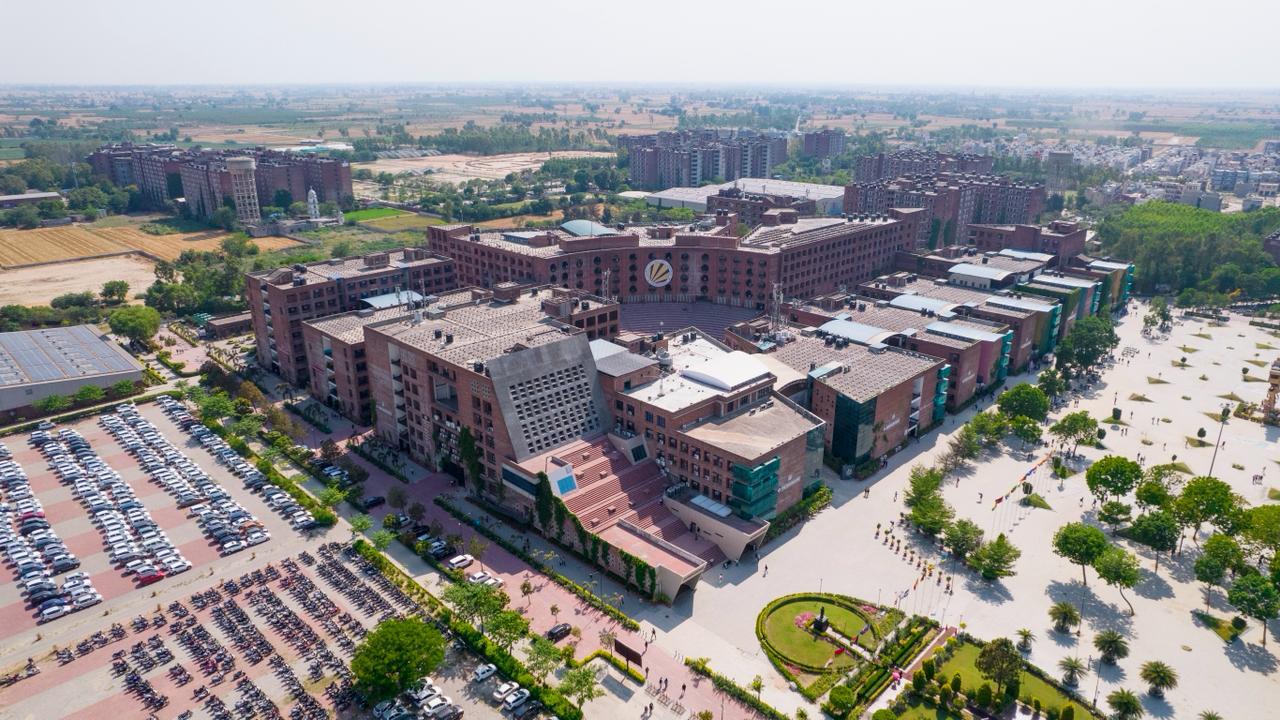
May 28: Lovely Professional University (LPU) is strengthening its agriculture education framework with increased emphasis on practical training, climate-smart farming practices, and research-led learning as the agricultural sector faces growing challenges linked to climate change, water scarcity, soil degradation, and declining crop productivity.
Through its School of Agriculture, the university is expanding experiential learning opportunities designed to equip students with industry-relevant skills and exposure to modern agricultural technologies. The initiative comes at a time when the sector is witnessing rising demand for professionals trained in sustainable farming, agri-innovation, and technology-enabled agricultural practices.
Recognised by the University Grants Commission (UGC), accredited with an NAAC A++ grade, and approved by ICAR-NAEAB, LPU combines classroom learning with hands-on agricultural training through research farms, laboratories, polyhouses, horticulture and beekeeping facilities. The programs focus on crop production, soil health, climate-resilient farming, agribusiness, and agri-tech applications to prepare students for modern agricultural practices.
LPU offers a wide range of agriculture programs, including B.Sc. (Hons.) Agriculture, M.Sc. specialisations in Agronomy, Genetics & Plant Breeding, Soil Science, Entomology, Plant Pathology, Horticulture (Fruit, Vegetable, Floriculture & Landscaping), and Food Science & Technology, along with PhD programs across six disciplines. The curriculum is designed to integrate theoretical knowledge with field-based application through initiatives such as RAWE (Rural Agricultural Work Experience), farm schools, and industry incubators.
LPU helps transform agricultural education by:
1. Skill-Based Learning Modules – Practical Crop Management, Agri-tech Integration, Post-Harvest Management & Entrepreneurial Skills
2. Experiential Learning – Industry Partnerships, Farm Schools & Incubators
3. Global Certification & Training – GAP (Good Agricultural Practices) or HACCP (Hazard Analysis Critical Control Points) – in partnerships with international universities for exposure to global agricultural technologies.
4. Innovation & Research Focus – Genetics & Plant Breeding, Climate-Smart Agriculture & Renewable Energy in Farming.
LPU’s agricultural education is benchmarked to international standards through global certifications (GAP — Good Agricultural Practices; HACCP — Hazard Analysis Critical Control Points), partnerships with international universities, and placement-linked learning that sends students to farm operations worldwide. Students from the School of Agriculture have secured internships and placements across international agricultural and allied sectors, while recruiters, including Mahindra, Syngenta, Adani, Amazon, and Reliance, continue to engage with the university’s agriculture talent pool.
This approach also aligns with LPU’s EduRevolution model, which focuses on project-led, application-based and future-ready learning that enables students to move beyond theory and solve real-world challenges. Through its “Earn Your Fee Back” approach, LPU also encourages students to convert practical learning, agri-innovation, entrepreneurial projects and applied research into value-creating opportunities while they continue their education. Under this model, students have collectively earned over ₹20 crore through entrepreneurship, live projects, consultancy assignments and internships. More than 15,000 students have replaced conventional classroom-only learning with MOOC certifications, industry projects and hackathons, while over 400 student-led start-ups are driving innovation, generating revenue and addressing real-world challenges across sectors.
With Indian agriculture continuing to face climate-related and resource-driven pressures, institutions are increasingly focusing on developing skilled professionals capable of supporting resilient, productive, and sustainable farming systems for the future.