New Delhi, Jan 07: Jairangam Fringes Delhi 2026 concluded on a resonant note at Triveni Kala Sangram, leaving audiences deeply moved through two evenings of compelling performances that foregrounded marginal voices, lived realities, and the transformative power of theatre.
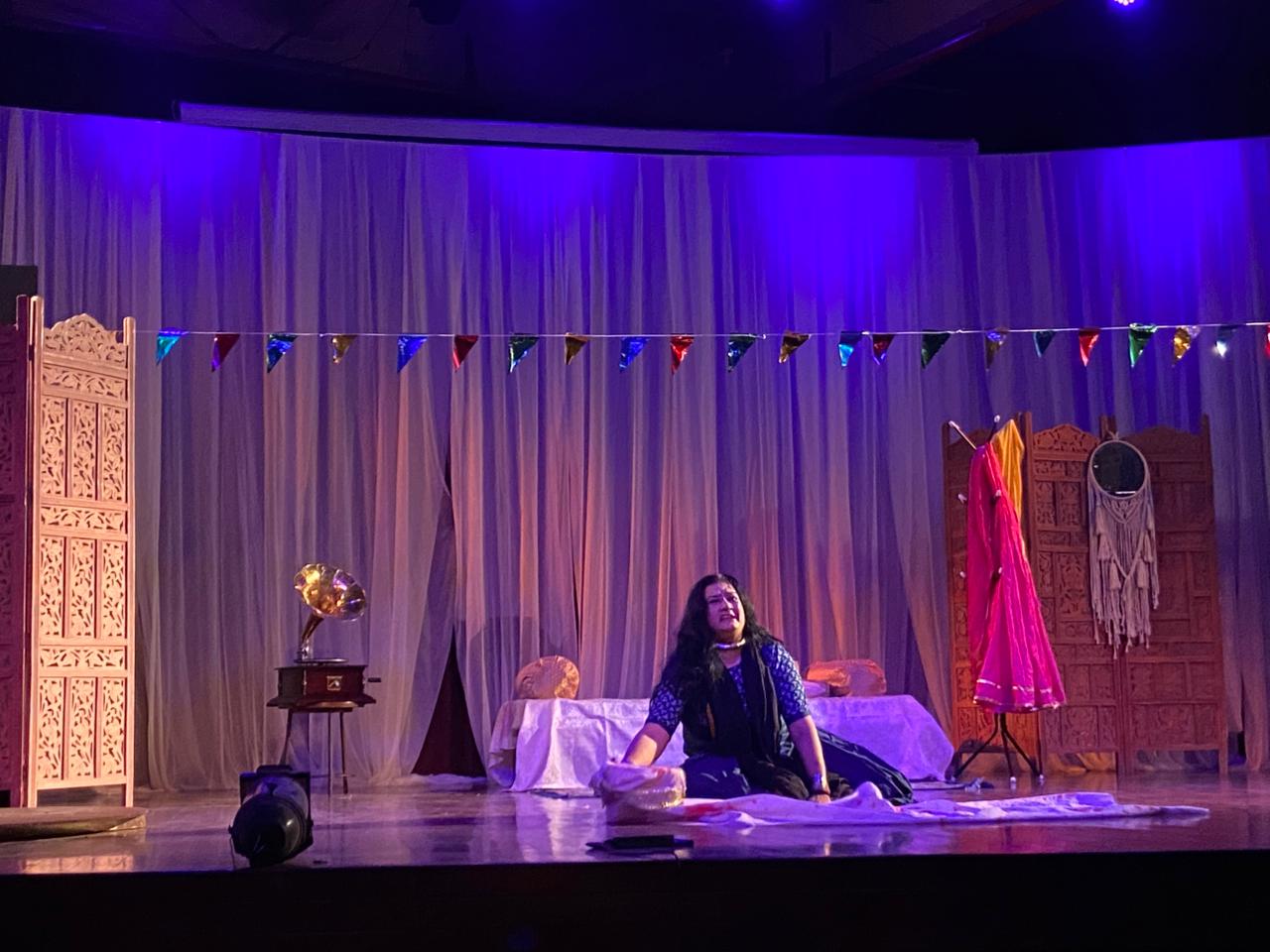
Held on January 6 and 7, the Delhi edition of Jairangam Fringes presented two critically acclaimed productions, Naachni and Kashida Phool, drawing an engaged audience of theatre lovers, cultural practitioners, students, and artists from across the capital. Supported by the Ministry of Culture, Government of India, the showcase reaffirmed Jairangam Fringes’ commitment to nurturing socially relevant, artist-led narratives. As one audience member noted, “Jairangam Fringes doesn’t just present performances; it creates conversations. These are stories we need to witness, not just watch.”
The festival opened with Naachni, a searing solo performance written by Bhanu Bharti, directed by Madhur, and performed with striking intensity by Dr. Rakhi Joshi. Through song, movement, and silence, the 70-minute Hindi production explored themes of gender, power, exploitation, and artistic identity, compelling audiences to confront uncomfortable questions about the ownership of art and the cost borne by the artist. Minimal yet evocative staging allowed the emotional depth of the narrative to linger long after the final lights dimmed. “Naachni was unsettling in the best way possible. It forces you to confront how art and exploitation often coexist,” shared an attendee after the show.
On the second evening, Kashida Phool: Journeying with the Cross Dancers of Rajasthan unfolded as a moving tapestry of resilience and self-expression. Performed by Chaina Meena and Rakesh Meena, and facilitated and directed by Shreeya Kishanpuriya, Kamakshi Saxena, and Supriya, the 45-minute Hindi performance blended movement and storytelling to trace the personal and artistic journeys of cross dancers from Rajasthan. Rooted in the symbolism of kashida embroidery, the performance celebrated courage, identity, and the quiet strength of choosing one’s own path. “Every movement felt like a stitched memory, fragile yet defiant,” observed an audience member, capturing the emotional tenor of the evening.
Speaking on the conclusion of the Delhi showcase, the organisers shared that the overwhelming audience response reaffirmed the need for platforms that centre voices often missing from mainstream cultural spaces. “These performances are not only acts of artistic excellence but also social reflections that invite dialogue, empathy, and introspection,” they said.
Cultural commentators attending the festival highlighted the curatorial strength of the showcase. A theatre critic remarked,
“Jairangam Fringes Delhi 2026 reaffirmed the role of theatre as a living social document, one that questions power, gender, and belonging with rare honesty.” Another noted that “with Naachni and Kashida Phool, the festival offered two distinct yet deeply connected explorations of marginal identities, delivered with artistic restraint and emotional precision.”
Across both evenings, the performances sparked conversations that extended beyond the stage, with audiences lingering long after the lights dimmed. “The intimacy of the space made the performances feel personal. It stayed with me long after the curtains closed,” said a regular theatre-goer.
Jairangam Fringes has steadily emerged as an important national platform for independent theatre-makers, connecting diverse regional narratives with wider audiences. The Delhi edition further strengthened this vision by fostering meaningful engagement between performers, practitioners, and the city’s cultural community.
No Responses