Only 18% of Young Women in Paid Work Despite Education Parity; Great Lakes Study Flags Safe Housing as Missing Link
Chennai, Mar 7: Even as India has achieved near gender parity in higher education, only 18% of young women aged 20–29 are in paid employment nationally, compared to nearly 79% of young men. This human capital is being stranded by a ‘locational mismatch’ and that providing affordable, secure housing can solve that gap, warns a new white paper from the Centre for Finance and Economic Research (CFER) released by the Great Lakes Institute of Management on the occasion of International Women’s Day 2026, in association with the Madras Management Association.
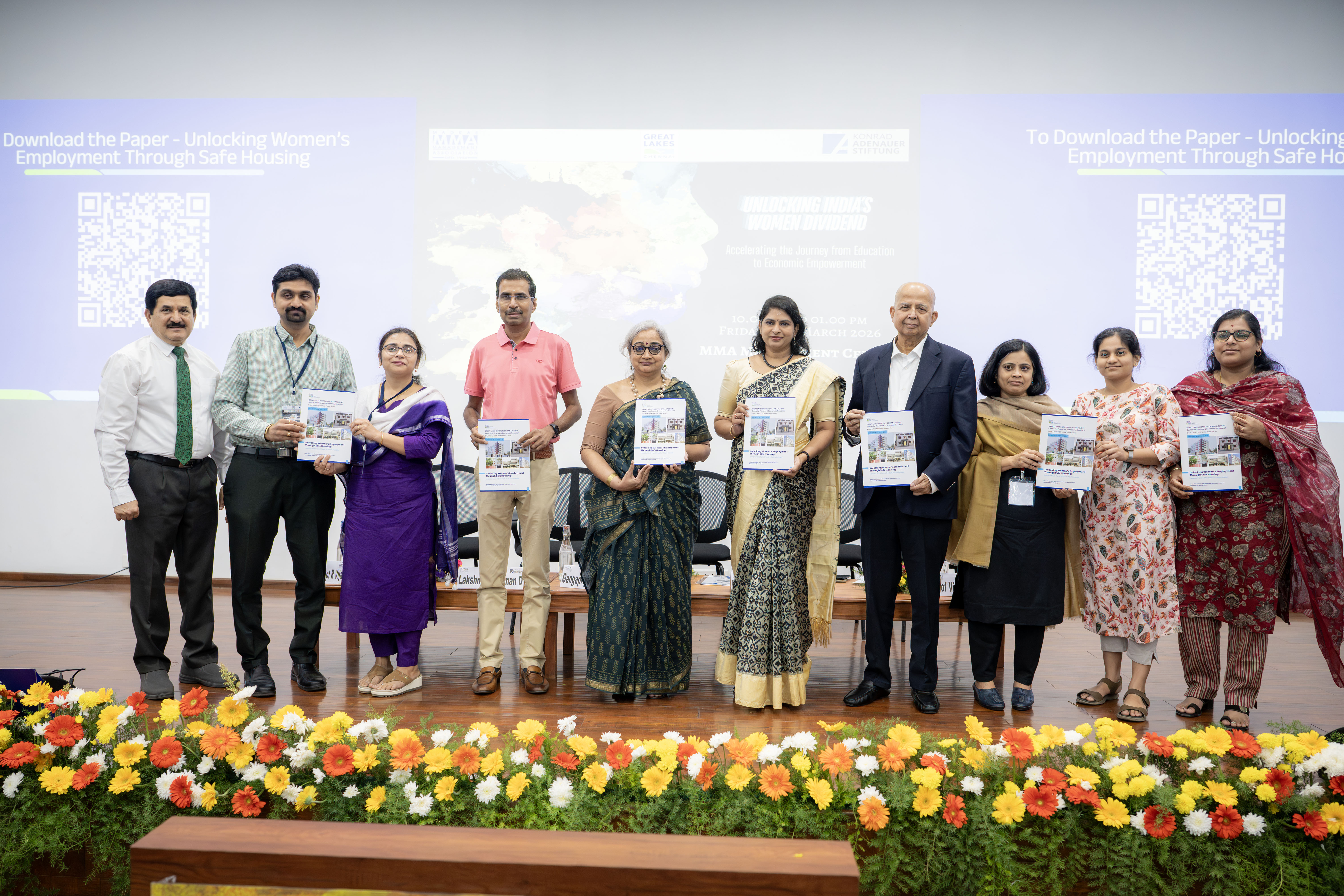
The independent study by the researchers at Great Lakes CFER, ‘Unlocking Women’s Employment Through Safe Housing: Lessons from Tamil Nadu’s Thozhi Hostels,’ was released on the occasion of International Women’s Day 2026 in association with the Madras Management Association.
By analysing Tamil Nadu’s ‘Thozhi’ (Female Friend) network, which operates at near 100% capacity in metropolitan Chennai, researchers identified a ‘Hostel-Mediated Empowerment Pathway’ that enables women to enter the workforce, build financial independence, and defer marriage.
Vidya Mahambare, the lead author and Union Bank Chair Professor at Great Lakes Institute of Management, stated:
“Our research proves that the lack of secure housing is one of the silent barriers keeping India’s demographic dividend from being realised. By treating safe housing as labour-market infrastructure, we can bridge the gap between the classroom and the career, allowing educated women to finally navigate the city on their own terms”.
Arti Srivastava, Assistant Professor and a co-author of the study, added:
“The data reveal a profound shift in agency: once women have a stable, secure base, their confidence and financial autonomy increase. These hostels allow residents to build the professional routine necessary for career persistence. We found that affordable accommodation allows women to focus on upskilling and financial planning rather than the constant anxiety of urban survival”.
High-Impact Findings from the White Paper, which draws on administrative data, survey responses, and in-depth interviews with 55 residents and four hostel managers in the Chennai metropolitan region,
- A National Magnet: Thozhi hostels in Chennai house residents from at least 12 different states and Union Territories, functioning as a national labour market enabler.
- The Autonomy Surge: Residents reported significant improvements in decision-making autonomy and financial independence after moving into the hostels.
- Marriage Deferral: Secure, government-backed housing provides a socially accepted reason for women to live independently, allowing them to prioritise career stability over early marriage.
- Infrastructure for the Future: The study highlights that newly constructed facilities are highly digitised, featuring biometric access, CCTV, and automated financial operations to ensure “procedural certainty” and safety.
Delivering the Chief Guest address, Ms Gangapriya Chakraverti, India Site Head & Managing Director, Ford Motor Company, said:
“India cannot speak of a demographic dividend if half its young women are unable to participate in paid work. Industry has a responsibility to look beyond hiring and examine the structural constraints: housing, mobility, safety, that determine whether women can even enter the workforce.”.
At the event, Prof Debashis Sanyal, Director, Great Lakes Institute of Management, noted:
“We have successfully expanded access to higher education. The harder challenge now is conversion, converting education into stable, productive employment. When women exit or never enter the labour force because of avoidable constraints, the economy absorbs that cost.”
To scale the impact of hostel initiatives nationwide, the report offers several strategic suggestions for policymakers and administrators:
- National Investment: Strengthen the case for enhanced Central government co-financing, recognising that states providing housing for inter-state migrants generate a massive positive externality for the national employment system.
- Fiscal Sustainability: Encourage private participation through employer bed-leasing and revenue-sharing models to expand the network in high-demand urban clusters.
- Preserving Access: Introduce income-linked transition policies, where residents exceeding a specific earnings threshold are given a period to find alternative housing, ensuring beds remain available for lower-income women and new migrants.
- Operational Excellence: Separate short-term and long-term stays to prevent routine disruption, and de-link air-conditioning costs from base tariffs to keep entry-level housing accessible.
- Beyond Shelter: Introduce job information boards, financial guidance for savings, and health check-ups on-site.
The paper concludes that Thozhi Hostels have a significant positive impact on employment outcomes and personal growth. By improving and expanding this model, India can unlock the full economic potential of its educated female workforce.
No Responses