Hyderabad, March 08, 2026: A full-day, power-packed PanIIT Hyderabad Summit 2026, bringing together national leaders in technology, governance and industry, was held on Sunday at The Westin, Madhapur in the city. More than 250 participants attended the summit. The event was organised by PanIIT Alumni India, the umbrella organisation representing more than five lakh IIT alumni.
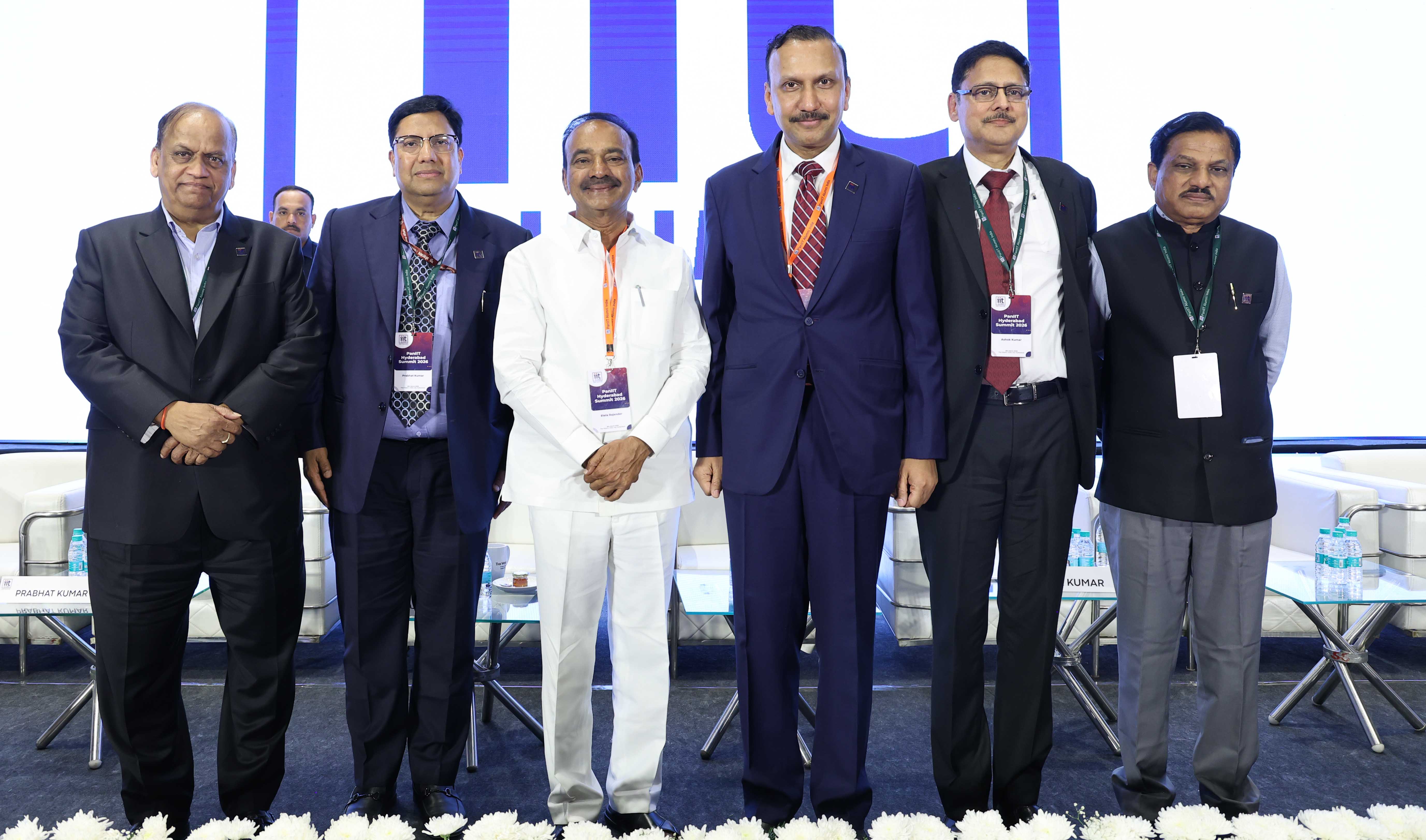
Shri Etela Rajender, Member of Parliament, inaugurated the summit. Speaking on the occasion, he said the IIT ecosystem is helping spread high-quality science and technology education across India. Collaboration among ecosystem players and research and development institutions will further strengthen the innovation landscape, he noted.
He said Indian talent in science and technology enjoys global demand, and Indians have immensely contributed to the tremendous technological growth of the United States of America, which is known for its technological superiority. However, he observed that the same country is now trying to dominate others in certain spheres. Addressing the IIT talent pool assembled at the summit, he asked, “Why should we not use the same talent and power to make India even stronger?”
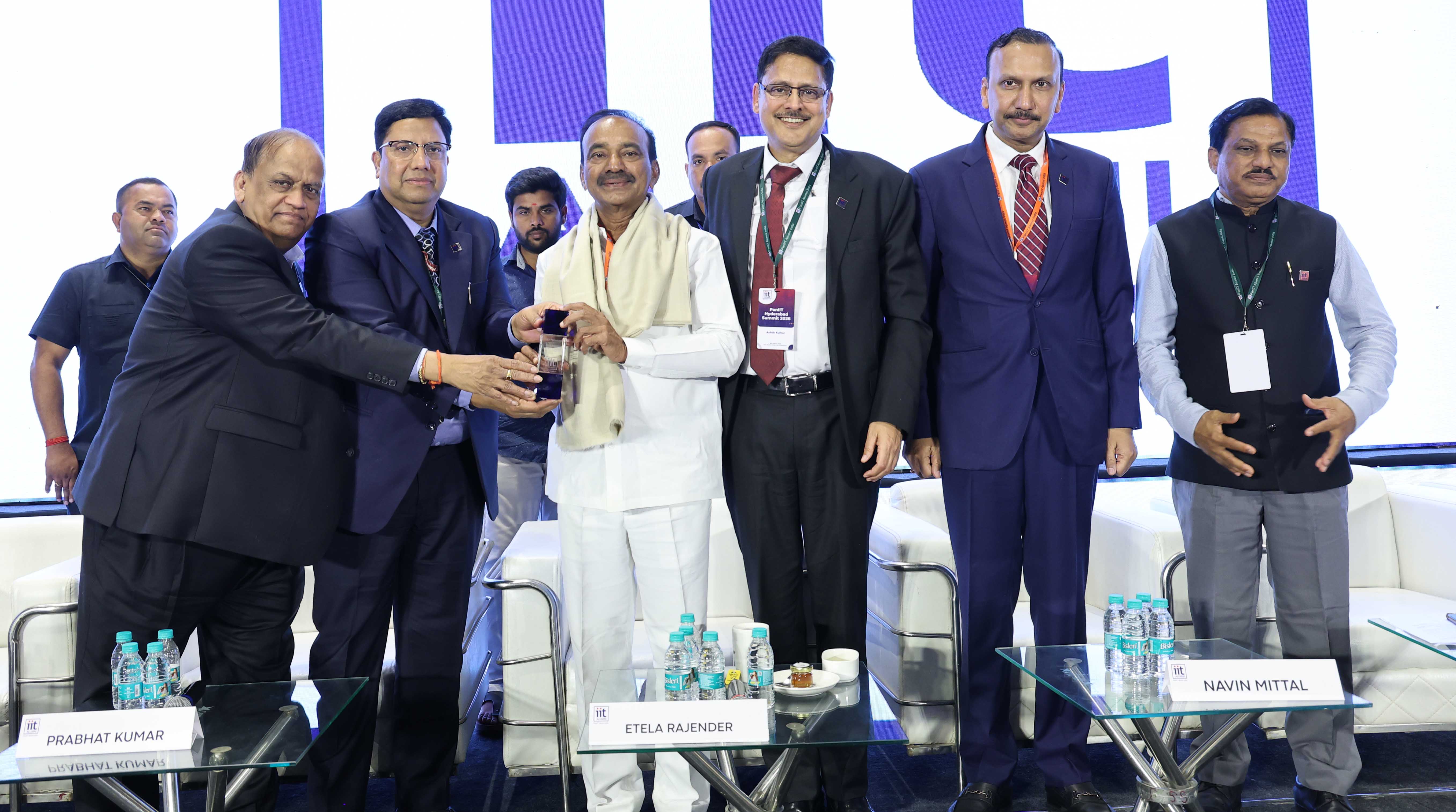
Reiterating his message, he said, “India’s scientific and technological talent has global demand—let us use it to strengthen our nation.” He also urged the community to build technology for construction and development rather than for destruction.
Speaking on Healthcare Transformation in India, Shri Sunil Kumar Barnwal, IAS, CEO, National Health Authority, Ministry of Health and Family Welfare, Government of India, highlighted the challenges of fragmented healthcare systems. He noted that multiple health identities for a single citizen and lack of integration lead to high Out-of-Pocket Expenditure (OOPE).
He explained that India’s healthcare ecosystem is undergoing a significant transformation. “From a fragmented healthcare system, we are now moving towards an intelligent and productive ecosystem,” he said. Through India Stack, India has become the first country to implement all three core Digital Public Infrastructures (DPIs): digital identity, real-time payments and consent-based data sharing.
He added that in 2020, the Hon’ble Prime Minister announced the Ayushman Bharat Digital Mission (ABDM), which leverages digital public infrastructure to facilitate interoperability in digital health transactions. ABDM is now becoming the digital backbone of Indian healthcare.
Referring to Ayushman Bharat – PM Jan Arogya Yojana (AB PM-JAY), he said its robust IT platforms and anti-fraud mechanisms enable nearly 20 lakh claims to be processed every month. “The infrastructure is now built. Data moves only with consent. Health systems are connected. We are now moving from digitised health to intelligent healthcare,” he said.
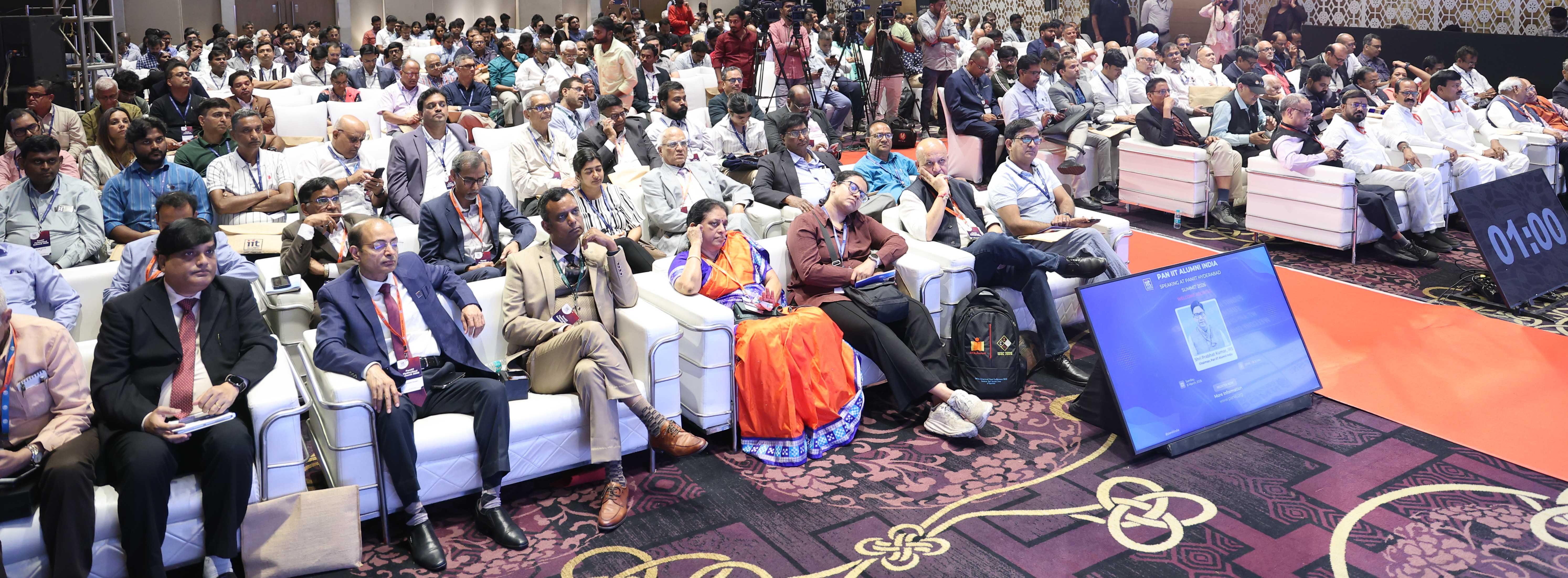
Speaking on Policy, Regulation and the Future of India’s Energy Infrastructure – Backbone of Industrial Expansion, Shri Navin Mittal, IAS, Special Chief Secretary, Energy, Government of Telangana, shared insights into India’s and Telangana’s energy production and distribution landscape. He said solar energy generation during the day now surpasses thermal power in many instances.
He also highlighted potential petroleum supply challenges due to geopolitical tensions involving Iran, the United States and Israel, noting that about 85 percent of India’s petroleum requirements are imported. He pointed out that electric vehicles have significantly lower operational costs compared to conventional vehicles.
He further stated that in December 2025, India’s renewable installed capacity crossed conventional power capacity for the first time in history, marking a major milestone in the country’s energy transition.
Speaking on Digital Governance and Public Technology Transformation, Shri Bhavesh Mishra, IAS, Special Secretary, IT & Electronics Department, Government of Telangana, explained how Hyderabad has overtaken Bengaluru to become India’s top destination for Global Capability Centres (GCCs). Citing a study by UnearthInsights, he said Hyderabad accounted for 46 percent of all new GCCs, while Bengaluru captured 33 percent between January and November 2025.
He said the city currently hosts around 60 GCCs, with another 25 in expansion, and highlighted that Hyderabad has emerged as a major hub for IT, GCCs, pharmaceuticals, defence and aerospace sectors.
He also spoke about OpenClaw and the rise of the “One-Person Unicorn.” OpenClaw, an open-source autonomous AI assistant developed by software engineer Peter Steinberger in 2025, demonstrates the emerging concept of a one-person unicorn. Built by a single developer, OpenClaw can autonomously perform tasks such as managing files, sending messages, writing code and interacting with digital services using advanced AI models. The project quickly gained global attention. Its rapid success highlights how AI-powered tools are enabling individual innovators to build impactful, globally scalable technologies, signalling a new era where a single entrepreneur could potentially build billion-dollar innovations.
He also referred to ancient Indian scholar Pāṇini, regarded as one of the greatest linguists in history. His work Aṣṭādhyāyī, consisting of around 4,000 grammatical rules, created a highly systematic and scientific framework for the Sanskrit language.
Shri Prabhat Kumar, IRS, Chairman, PanIIT Alumni India, said IITians have played a significant role not only in nation building in India but also in the development of many countries worldwide. He noted that the United States is the largest importer of IIT talent, and IITians have contributed significantly to global technology leadership.
He also referred to the recent AI Summit, where IITians played a major role. He mentioned that French President Emmanuel Macron recently observed that many global CEOs of multinational companies are Indians and IITians. He described the PanIIT Summit as a convergence of brilliant minds and added that Hyderabad, known as the City of Pearls, would ensure that participants take back a “pearl of wisdom” by the end of the summit.
Welcoming the gathering and setting the tone for the summit, Shri Sudhakar Gande, Convener, PanIIT Hyderabad Summit 2026, said Hyderabad is among the most dynamic and fastest-growing cities in India. Nearly 46 percent of GCCs are located in the city, and about 16 percent of India’s software exports originate from Hyderabad, with the city growing three times faster than the national average. He also noted that around 25 percent of Fortune 500 companies are headed by IIT alumni.
A panel discussion titled “Tradition Meets Transformation: The IIT Growth Story” was moderated by Shri Amitabh Ranjan, Registrar, IIPA. The panelists included Prof. Sukumar Mishra, Director, IIT (ISM) Dhanbad; Prof. Venkappayya R. Desai, Director, IIT Dharwad; and Prof. Mahendrakumar Madhavan, Dean, IIT Hyderabad.
The moderator observed that India possesses a rich knowledge tradition spanning thousands of years, from Aryabhatta and Sushruta to remarkable engineering feats such as the Ram Setu. He noted that India’s civilisational heritage remains unmatched and emphasised the Prime Minister’s vision that 200 years of colonial influence must be intellectually decolonised by 2047 as India moves towards Viksit Bharat.
He also pointed out that since their inception in 1951, IITs have helped create lakhs of direct jobs in India.
Prof. Sukumar Mishra, Director, IIT (ISM) Dhanbad, said India’s education system and the IIT ecosystem have evolved from science to applied science, to engineering and advanced technology, playing a critical role in national development.
Prof. Venkappayya R. Desai, Director, IIT Dharwad, cited examples from Singapore and the Netherlands on sustainable water management. He referred to Singapore’s NEWater initiative, where wastewater recycling has grown from 2.5 percent to nearly 40 percent of water supply, helping the country manage scarce resources effectively.
He also highlighted the Netherlands’ innovative water management practices, including floating infrastructure and advanced wastewater treatment technologies that allow water to be reused for agriculture, industry and environmental conservation. This circular water approach, he said, ensures that demand remains aligned with supply.
Prof. Mahendrakumar Madhavan, Dean, IIT Hyderabad, emphasised that IITs are no longer just teaching institutions but centres of innovation, invention and technology for humanity. He raised an important policy question, suggesting that spending on research and development should be considered under Corporate Social Responsibility (CSR) and that CSR funds should be allowed to support R&D.
In another session on Healthcare Transformation in India, Shri Sunil Kumar Barnwal, IAS, reiterated that technology, policy innovation and collaborative governance are reshaping India’s healthcare ecosystem, making quality healthcare more accessible and equitable for millions.
Dr. Tessy Thomas, former Director, DRDO, spoke on “Science, Strategy and Security.” She highlighted that space-based defence infrastructure will shape the future of global security, and that artificial intelligence will significantly influence how future wars are fought. She emphasised that the future of defence and aerospace will depend on how effectively India harnesses science and talent.
The summit featured focused thematic tracks addressing some of India’s most pressing opportunities, including: Infrastructure & Energy Leadership; Defence Innovation and Aatmanirbhar Bharat; Urban Infrastructure; Digital Transformation
And Healthcare & Life Sciences for Bharat
Eminent speakers from leading organisations such as DRDO, Microsoft India, NMDC, MIDHANI, Apollo Hospitals and Yashoda Hospitals shared their insights, alongside leaders from several high-growth startups and technology firms. Directors from IIT Dharwad and IIT (ISM) Dhanbad, as well as the Dean of IIT Hyderabad, participated in the discussions.
The summit served as a major convergence point for policymakers, industry leaders, innovators, entrepreneurs and members of the global IIT alumni network. It aimed to foster meaningful dialogue on innovation, technology-driven growth, infrastructure development and collaborative nation building, reinforcing the role of the IIT ecosystem as a strategic asset for India’s future.
Key sessions covered innovation ecosystems in emerging IITs, healthcare transformation in India, digital governance and public technology, and policy-driven industrial growth. Discussions also covered AI-driven innovation, startup growth strategies, resource security and large-scale infrastructure projects shaping modern India.
A dedicated startup session provided an opportunity for startups to pitch their ideas before angel investors and venture capitalists. This session was organised in collaboration with T-Hub and T-Works.
Shri Ashok Kumar, General Secretary, PanIIT, proposed the vote of thanks during the inaugural function.
—

No Responses