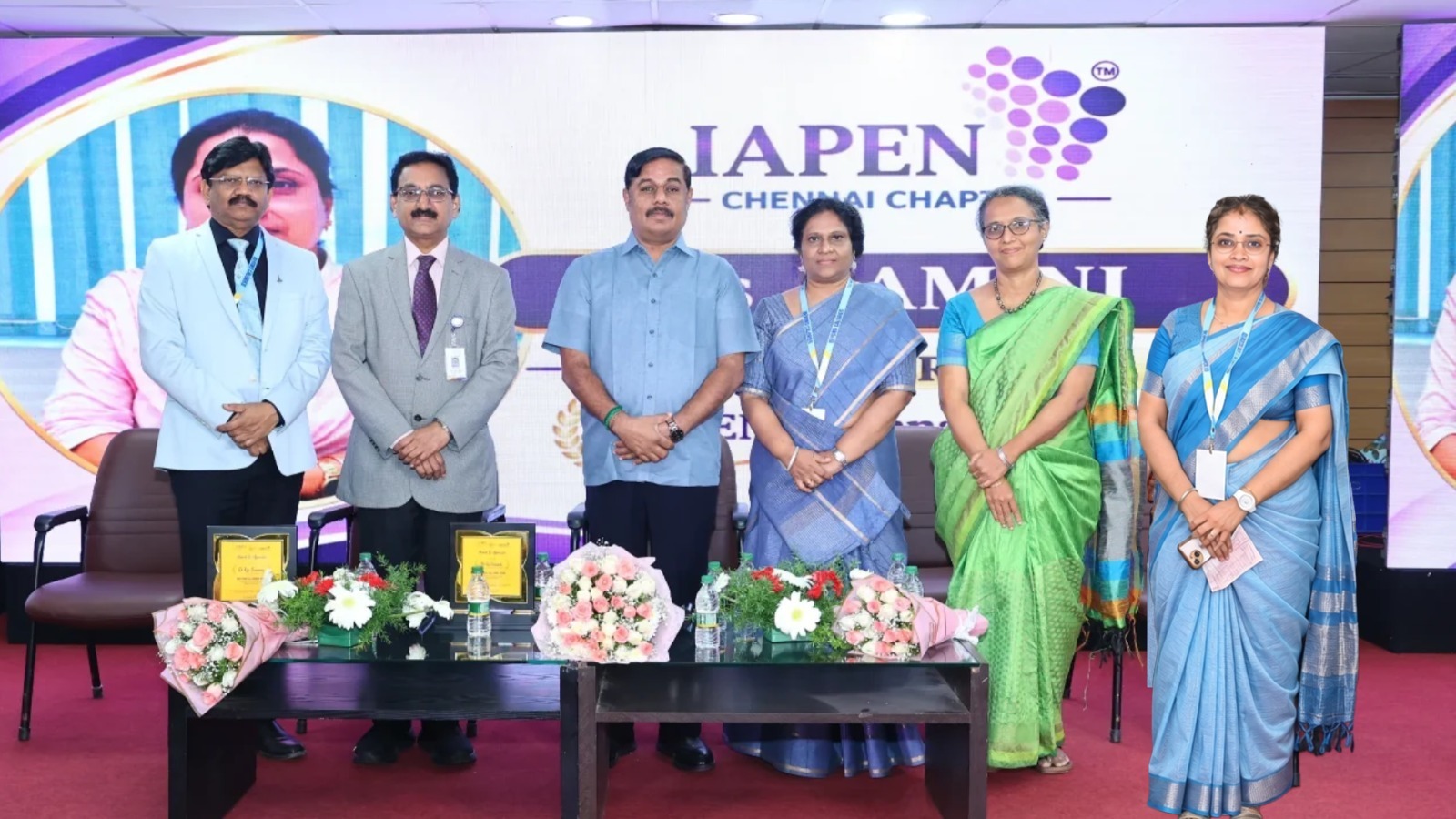
Chennai, November 25, 2026: Doctors, nutrition specialists, researchers and health leaders took part in Beyond Calories 2026, the National Gastrointestinal Nutrition Summit organised by the Indian Association of Parenteral and Enteral Nutrition (IAPEN), Chennai Chapter and SIMS Hospitals, with the objective of emphasising the need for healthcare professionals and the public to look beyond calories to the quality of nutrition and its effect on recovery, muscle health and long-term well-being.
The summit saw the adoption and signing of the Sarcopenia Declaration, a national pledge against muscle loss. Under the Declaration, clinicians and hospitals will screen for sarcopenia early, set protein targets, mobilise patients early and build screening and rehabilitation into routine care, including post-ICU follow-up. Educators and professional societies will teach sarcopenia at every level of training and work towards a shared Indian consensus, while researchers will generate Indian data and cut-offs that suit Indian body types. The doctors also extend their sincere thanks to Dr Ravi Pachamuthu, Chairman, SRM Group, and Dr Raju Sivasamy, Vice President, SIMS Hospital, for their support and encouragement.
Policymakers are urged to recognise sarcopenia in national healthy-ageing and non-communicable disease programmes, with a focus on rural and low-income communities. Citizens are asked to know their muscle status, eat protein, move daily, and tell others.
Sarcopenia refers to the progressive loss of muscle mass, strength and function, which can set in with age and be accelerated by poor nutrition (especially low protein intake), inactivity and chronic diseases. It raises the risk of falls, fractures, disability, slower recovery from illness or surgery, and loss of independence.
The event featured talks by Dr Patta Radhakrishna, Director and Head, Department of Surgical Gastroenterology, SIMS Hospitals, and President, Indian Association of Surgical Gastroenterologists; Dr Kalavathy Swarna, Senior Consultant, Critical Care Medicine, SIMS Hospitals, President, IAPEN Chennai Chapter, and Chairperson, Indian Society of Critical Care Medicine, Chennai Branch; and Dr Vinitha, Head, Department of Nutrition, SIMS Hospitals, and Vice President, IAPEN Chennai Chapter.
In his comments, Dr Patta Radhakrishna said, “Sarcopenia is common, yet awareness of it remains low. Muscle loss is often dismissed as ‘getting old’, so it goes unnoticed until a fall, a fracture or a long hospital stay. In a national study of older Indians, 43.6% of adults aged 60 and above had sarcopenia, and 19.4% had the severe form. But it is not limited to the elderly. It also affects the middle-aged and can occur in younger people with chronic illness, poor nutrition or a sedentary lifestyle. People with diabetes, obesity and other chronic or metabolic conditions are especially vulnerable and should be screened for muscle health. Muscle is the body’s main site for clearing blood sugar, so losing it makes diabetes harder to control, and diabetes in turn speeds up muscle loss. A recent study found that Indian adults with type 2 diabetes carry a high burden of sarcopenia and sarcopenic obesity.”
Talking about the Sarcopenia Declaration, Dr Kalavathy Swarna said that the Declaration’s central message is simple: Muscle is the new currency. It is a reserve for an active lifestyle and good mobility, and one that every person draws on in illness, surgery and ageing. It is one the nation must now protect together.
Urging people to get their muscle strength checked, she said, “People should know their muscle. Weakness, difficulty rising from a chair or climbing stairs, slower walking, tiring early, and unexplained falls need a medical check. Everyone should ask their doctor for a simple strength check, such as grip strength, walking speed or a sit-to-stand test, from middle age onwards. It is never too early, or too late, to protect your muscles. Protein, strength exercise and early care help at any age. Do not wait for old age to start.”
In her comments on the importance of nutrition, Dr Vinitha said, “Our plate and our routine play a part. This is very much about nutrition. A community study near Pune found sarcopenia more often among rural adults (14.8%) than urban adults (6.8%). This shows that when rural people work hard without adequate nutrition, their muscle health suffers.”
She added, “Modern life, with its challenges, has led many of us to make poor eating choices, sit more and move less. People should eat protein at every meal, building meals around dal and pulses, milk, curd, paneer, eggs, fish, chicken, soy, nuts and sprouts, and making cereals a smaller part of the thali. They should lift something heavy twice a week, whether with resistance bands, body-weight exercises or weights, with supervision for older adults, and add a daily walk. Long periods of sitting should be broken with short walks. Crash diets should be avoided, because fast weight loss without protein and exercise costs muscle as well as fat. People should also speak to a doctor or dietitian before using protein supplements, especially if they have kidney disease.”