Goa often reveals itself through sound, the hush of early morning, a distant bell, the murmur of prayer carried on the breeze. Away from familiar travel trails, another rhythm takes shape across the State, one guided by faith, memory and landscape. This side of Goa exists beyond regular itineraries and timelines, in places where devotion shapes daily routines and sacred spaces rise naturally from their surroundings. Across villages, hinterlands and river valleys, temples, churches and mosques continue to serve as anchors of faith, offering travellers moments of stillness and reflection.
Scattered across the region are places of worship that have shaped Goa’s cultural and spiritual identity for centuries. Temples and churches here are not isolated landmarks; they are part of lived landscapes, woven into villages, river valleys and forested hinterlands. Visiting them is less about sightseeing and more about entering a rhythm that has endured across generations.
Among the most significant spiritual journeys in the State is the Ekadasha Teertha temple circuit. Linking eleven important temples across Goa, the circuit traces ancient traditions that continue to guide worship even today. Each temple carries its own stories, rituals and community life, offering visitors a glimpse into a spiritual heritage that remains active rather than preserved behind glass.
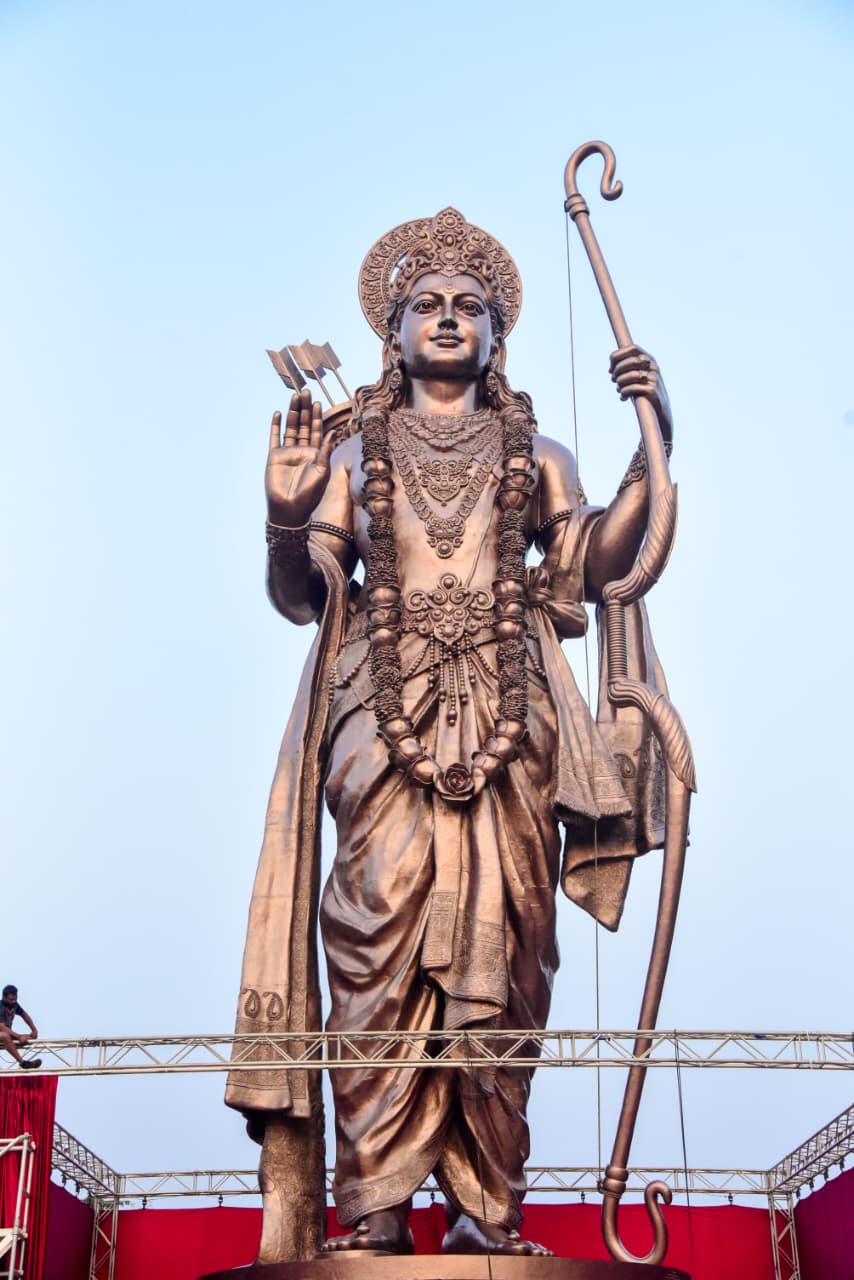
Adding to this evolving spiritual map is the Ram statue among the tallest Ram statues in Asia which was installed during the 550th-year celebrations of the Shree Samsthan Gokarn Partagali Jeevottam Math in Goa. Set against open skies and green surroundings, the statue has become a space of quiet reverence, offering devotees a moment of pause where devotion blends naturally with the landscape. The celebrations witnessed an impressive turnout, with approximately 10,000 to 15,000 devotees visiting daily, and footfall rising to nearly 20,000 to 25,000 on the final day. Over the ten-day period, an estimated 1,32,000 to 1,50,000 devotees attended the celebrations, travelling from Karnataka, Maharashtra, Delhi, Sindhudurg, Sawantwadi, Honnawar, Bhatkal and other regions. The scale and diversity of participation highlighted Goa’s growing prominence in spiritual tourism and its ability to host significant faith-based gatherings in a serene and organised manner.
The ‘Gomant Sarita Poojan’ project at Narve on the banks of the River Mandovi will further strengthen Goa’s spiritual landscape, with its foundation laid in November 2025. Envisioned as a riverfront spiritual space featuring a dedicated Ghat Aarti and improved visitor amenities, the initiative reflects a growing focus on heritage-led, community-centric spiritual tourism.
What makes Goa’s spiritual spaces distinctive is their setting. Many lies beyond the more frequented routes, reached through winding roads bordered by paddy fields, forests and small settlements. Churches rise gently above village squares, while temples appear almost unexpectedly amid dense greenery, reminding travellers that nature and faith have long shared the same ground here.
Across Goa, several temples and churches have also seen careful restoration by Goa Tourism Development Corporation(GTDC) in recent years, ensuring that these spaces remain welcoming while retaining their original character. GTDC has invested in a range of upgradation and improvements in the vicinity of places of worship, including infrastructure upgrades like walkways leading to temples, and modern amenities such as parking facilities, illuminating the area, toilet facilities, which have significantly transformed Goa’s spiritual landmarks. Various sacred sites like the Bhagwati Temple in Tuem, Radha Krishna Temple in Sanquelim, Sri Mallikarjun Temple in Canacona, Sri Chandreshwar Bhootnath Temple in Paroda, Sri Bhumika Temple in Sal, Sri Morjai Temple at Morjim, Mahadev Temple in Kakoda along with churches like Mae De Deus in Saligao, Our lady of Succour Church in Socorro, Our Lady of Penha De Franca Church in Penha De Franca, Our Lady of Immaculate Conception Church, Panaji have undergone valuable upgrades.
Festivals across Goa add vibrancy and rhythm to its spiritual landscape, offering visitors a window into the state’s living traditions. Celebrations such as Shigmo, São João, Chikhal Kalo in Marcel, Tripurari Poornima in Sanquelim, Gulalotsav in Zambaulim, Dindi Utsav in Margao, Shirgao Jatra, and Makharotsav during Navratri bring communities together in devotion, joy, and festivity. These events are not merely spectacles; they are deeply rooted in local culture, featuring rituals, music, dance, and processions that reflect centuries-old customs. Attending a festival allows travellers to witness faith as a lived experience, where spirituality, community, and celebration coexist harmoniously, enriching the journey along Goa’s sacred trails.
Goa’s spiritual heritage is reflected in its UNESCO-recognised sacred sites, including the Churches and Convents of Goa in Old Goa including the Basilica of Bom Jesus, Sé Cathedral, Church of St. Francis of Assisi, Chapel of St. Catherine, Church of Our Lady of the Rosary and the remains of the Church of St. Augustine alongside the Mahadev Temple at Tambdi Surla in the Bhagwan Mahavir Wildlife Sanctuary, South Goa.
Village life continues to revolve around these sacred spaces. Daily rituals, seasonal feasts, calls to prayer and community gatherings remain integral to the Goan calendar, offering visitors a chance to observe spirituality not as an event, but as a constant presence. Conversations with caretakers, priests, and parishioners often reveal stories that are deeply personal, rooted in memory and shared belief.
As travel interests evolve, Goa’s spiritual trails offer an alternative way of experiencing the State, one that values calm over crowds and reflection over rush. It is a journey shaped by forests and hinterlands, prayer spaces and quiet stays, where the destination is as much internal as it is geographical.
No Responses